These videos come courtesy of my son, Arjun. He's now the writer of the famous Oakland A's prospect blog. Have some fun and check these out...
- Here's a clever banned Pepsi commercial with Ronaldo using Far East customs against his opponents. Apparently, it was too sensitive to show (I don't understand why), but it's hilarious. It is a great way to associate a long running brand like Pepsi with youth, international and hip.
- Next, there's a banned sumo wrestling on that's worth checking out. What's clever is that even if the ad isn't shown on TV, it gets additional mileage on the web. Then again, maybe they were never meant for TV.
- Then, there's this ridiculous flop. As we know certain soccer players are notorious actors. No advertising angle, just funny.
- Most of the time when you are a basketball game, the trampoline dunkers are a side show. Well, this is better than the game.
Enjoy! Laugh!
Then go to Effinfunny and watch the Legend of Neil :)
Monday, August 11, 2008


Synchronized Diving?
I think I've heard them all. Baseball and softball are out of the Olympics after this year, but synchronized diving is a real event. On NBC, they actually show it on prime time. Is this to attract the female audience?
This Monday, there's swimming, tennis, badminton, judo, water polo, even archery, but we are being shown a sport that you could never see in any high school, college or TV. Yet NBC in its infinite wisdom believes synchronized swimming is a prime time event. We know the Chinese focused its athletes on sports that are not as competitive to drive up the medal count. Does it mean that NBC would feature it.
I've got young kids from 5 to 12 - and no - none of them said, "Oh, I'd like to do that." And yes, I have girls, too.
By the way, wasn't the 100 freestyle relay amazing? Just saw it on the DVR.
This Monday, there's swimming, tennis, badminton, judo, water polo, even archery, but we are being shown a sport that you could never see in any high school, college or TV. Yet NBC in its infinite wisdom believes synchronized swimming is a prime time event. We know the Chinese focused its athletes on sports that are not as competitive to drive up the medal count. Does it mean that NBC would feature it.
I've got young kids from 5 to 12 - and no - none of them said, "Oh, I'd like to do that." And yes, I have girls, too.
By the way, wasn't the 100 freestyle relay amazing? Just saw it on the DVR.
Friday, August 08, 2008
Haas Marketing Class
 Today I had the opportunity to speak at a Marketing class at the Haas School at UC Berkeley. It was a great class with my friend and now professor, Charles Rashall giving the class million dollar insights on critical aspects of marketing. Today was all about Place and how it is a critical component of establishing your brand. And yes, I did learn a few things.
Later in the session, I presented Online Marketing: the purchase process, advertising trends, various forms of online marketing like search, email and social media marketing and measurement methods,. We also discussed some real life case examples.
I really enjoyed how engaged the students were and the thoughtfulness of their analysis.
There is definitely hope in the next generation...
Tuesday, August 05, 2008
Big Computer Firm Signs with Position2
We learned today that a Top 5 global computer firm has decided to go with us as their interactive agency for search and banner media advertising. Kudos to the team for landing this large client. I originally met them during one of our Search Marketing events, so its a thrill to see them come over.
We'll announce more when we are allowed to go official...
We'll announce more when we are allowed to go official...
Wednesday, July 30, 2008
Big Sky Vacation

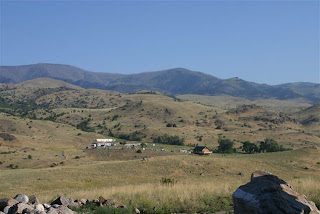
This year's summer vacation is in Yellowstone park. It is day 3 and we are having a great time. Except for today, every day we've been hiking in various parts of Yellowstone. As usual, Bhairavi has picked a beautiful house about 30 minutes outside the park. Here's the view outside the back. This pic does not do the view justice.
In addition to our hikes through the geysers and falls, I've been running every morning. Today, I did about 8 miles up and back. The second pic is the direction of the run (pic taken from our house).
The further I went, the more I added to the run. Houses are so far apart and its just interesting to see why one person picked one view over another. After about 4 miles up, I turned around. I was running low on water (the air is thin here) and every time I'd go up another hill, there would be more roads and houses. Also, I did not want the family to think I got lost.
The runs are picturesque. You can see so far into the distance - plateaus, farms, mountains, Yellowstone River. It is remarkably detailed and rich. People live so far apart from each other. I remember this kind of thing in Dunbarton, NH, but you don't see the kind of physical separation you see here.
I can see why T Boone Pickens considers this as part of the "Saudi Arabia of wind." The winds blew so hard that it knocked down the support pole at the house entrance. We had to shut our windows as they were bending on the hinges. Many times, I'd have to take my hat off while running.
We are 30 miles away from the nearest town in either direction. 60 miles from the nearest Wal-Mart - yes they are huge out here. Could you imagine driving 3 miles to get onto the main road, then at least another 30 to get somewhere? The summer season is essentially July and August. It's been over 70 degrees (F) every day and sunny, but we are getting to see the wonderful summertime experience. Out in Montana, they sometimes get snow all the way into June. I still wonder who plows all these gravel roads to houses deep in the mountains.
For us, this is a blast. We are in a beautiful home way up on a hill with incredible views out of every window. Everything is big - the bales of hay, the field, the trucks and the scenery. Just walking down to another house is about a quarter mile minimum. In a short walk to the end of our side road was half a mile. The kids love it. They have not even complained about shutting off the TV for the week. It's actually turned my oldest son into an entrepreneur - more on that later.
Tomorrow we are off to Grand Teton early in the morning....
Tuesday, July 15, 2008
US Advertising, Marketing Spend to Reach $412.4B in ‘08
Outsell, a market research firm released the article below. From what I've seen the media spend number make sense. It shows that there is a continuing shift to online media:
Spending on total US advertising and marketing will grow 3.9% in 2008 to reach $412.4 billion, with the advertising portion reaching $249.1 billion, according to the third annual ad spending report by Outsell, Inc., which said growth has declined from 2007’s 5.8%.
The report covers five key media types: online, print, events, TV/radio and others. Outsell surveyed 1,088 US advertisers on their spending plans for the year.
Among the significant findings:
- Companies are spending 61.8% of their online ad/marketing budgets - $65.1 billion - on their own sites, siphoning dollars away from other options. As a result, publishers are beginning to offer their own advertising/marketing services to recapture lost revenue.
- The fastest-growing of all ad types is online, which is expected to grow 12.3% in 2008 to $105.3 billion (or $40.2 billion excluding advertisers’ spending on their own sites). As a result, online spending now exceeds TV/radio/movies for the first time ($98.5 billion).
- Advertisers’ spending on traditional media remains significant - with print capturing 35.5% of spending ($147.0 billion) and events at 12.5% of the total ($51.7 billion). 54% of advertisers spread budgets across three or more media types.
- Out of 26 methods measured for effectiveness, advertisers rate their websites as the best for lead generation (75% effective), followed by exhibitions (66%), custom print publications (65%), direct mail marketing (64%), and trade magazines (64%).
- Asked what metrics they would track if they could track only three, advertisers point most frequently to cost per sale (46%), cost per lead (37%), and cost per click (32%).
Friday, July 11, 2008
Iran's Oil Push
With Iran dependent on oil to run massive subsidies to its economy, it should be pretty clear why they are rattling sabers at Israel and the US. It's all about oil. Analysts estimate that without the threat of war, oil would be priced at $80 per barrel. That's 40% lower than the current price. With 30% of world's oil passing through the Strait of Hormuz, a war with Iran could blast prices past $200/barrel, maybe even higher.
US and Iranian animosity goes back to the 1980. The desire to get back at Iran has always been there amongst US leaders following the hostage crisis. Iran funds Hezbollah and Hamas as their defense mechanism. Therefore, Iran and Israel are natural enemies. So this creates the never ending cycle. The US funds a massive military presence in the Middle East. Sunni countries like Saudi Arabia buy American weaponry. Oil prices rise enabling Middle East nations to make more and more while increasing costs and inflation for basics like food and fuel.
So why not keep up with the uranium enrichment game, missile tests, military exercises and massive military build-up? Poor countries lose and industrialized nations pay more & while oil economies create dependency between the populace and government subsidies. The same folks run government and bribe their citizens to keep quiet with artificial subsidies like 25 cent/gallon gas.
The US plays a partner to this by continually ratcheting up the pressure to defend its allies and interests. A small, relatively weak country like Iran takes on the dimensions of the old Evil Empire. The cycle continues circle in accelerating bands impacting greater and greater numbers. The world keeps paying more - food prices, iron ore, steel, basic chemicals - while a few countries feed instability in hopes that the fear is felt without having to follow through with their threats.
Why don anything for your people when you can keep growing your income from oil?
US and Iranian animosity goes back to the 1980. The desire to get back at Iran has always been there amongst US leaders following the hostage crisis. Iran funds Hezbollah and Hamas as their defense mechanism. Therefore, Iran and Israel are natural enemies. So this creates the never ending cycle. The US funds a massive military presence in the Middle East. Sunni countries like Saudi Arabia buy American weaponry. Oil prices rise enabling Middle East nations to make more and more while increasing costs and inflation for basics like food and fuel.
So why not keep up with the uranium enrichment game, missile tests, military exercises and massive military build-up? Poor countries lose and industrialized nations pay more & while oil economies create dependency between the populace and government subsidies. The same folks run government and bribe their citizens to keep quiet with artificial subsidies like 25 cent/gallon gas.
The US plays a partner to this by continually ratcheting up the pressure to defend its allies and interests. A small, relatively weak country like Iran takes on the dimensions of the old Evil Empire. The cycle continues circle in accelerating bands impacting greater and greater numbers. The world keeps paying more - food prices, iron ore, steel, basic chemicals - while a few countries feed instability in hopes that the fear is felt without having to follow through with their threats.
Why don anything for your people when you can keep growing your income from oil?
Tuesday, July 01, 2008
Guns in Atlanta Airport
Here's an interesting article from the fallout of the recent 5-4 Supreme Court gun decision. They said that a locality cannot deny the right to bear arms. Apparently, the language of the well-regulated militia did not count.
So in Atlanta, there's a challenge to the airport ban on carrying a concealed weapon. See the NY Times article.
In San Francisco, there's an NRA challenge to the ban on loaded weapons in public housing.
Of course, there's the overturning of the Washington DC law and the challenge in Chicago handgun rules. Notice that the big cities are trying to restrict gun - gee, I wonder why?
I'm sure there are some interesting arguments in the decision about how a handgun is an arm that everyone has the right to have, but a machine gun, howitzer and tank is not.
Well hell, if you can have a concealed weapon in an airport, why not in an airplane or college or a government office. Maybe Congressman should also have the right to have a handgun as should any visitor. As soon as you restrict it, you are restricting a right.
Maybe this is a good thing. If the NRA gets to push these silly argument, maybe there will be a new constitutional amendment that modifies the Second Amendment.
At minimum, everyone should be allowed to carry a handgun at Supreme Court hearings.
Meanwhile read this article on how Tasers are more effective than guns for self-defense.
So in Atlanta, there's a challenge to the airport ban on carrying a concealed weapon. See the NY Times article.
In San Francisco, there's an NRA challenge to the ban on loaded weapons in public housing.
Of course, there's the overturning of the Washington DC law and the challenge in Chicago handgun rules. Notice that the big cities are trying to restrict gun - gee, I wonder why?
I'm sure there are some interesting arguments in the decision about how a handgun is an arm that everyone has the right to have, but a machine gun, howitzer and tank is not.
Well hell, if you can have a concealed weapon in an airport, why not in an airplane or college or a government office. Maybe Congressman should also have the right to have a handgun as should any visitor. As soon as you restrict it, you are restricting a right.
Maybe this is a good thing. If the NRA gets to push these silly argument, maybe there will be a new constitutional amendment that modifies the Second Amendment.
At minimum, everyone should be allowed to carry a handgun at Supreme Court hearings.
Meanwhile read this article on how Tasers are more effective than guns for self-defense.
Saturday, June 28, 2008
Position2 Cool Creative
We are proud to see Position2's Coverity banner displayed in afaqs! Creative Showcase. afaqs! is a top marketing communications site. Congrats to the Position2 Creative Team for making highly technical software appeal to the wider audience!
Why $200 Oil is a Good Thing
As I was watching the pump go up over $75 to fill my tank, I wondered about that Goldman Sachs analyst projection of $200 per barrel oil. That would take the price per gallon to $7. That will certainly create a worldwide recession and undeniable changes to our behavior.
Then, I put my optimist hat on about super expensive oil. As you know, I'm an entrepreneur and preternaturally positive. The US is a dynamic economy. It's flexibility has accommodated incredible shocks and changes over time whether it be oil shocks in the 70's, the S&L crisis of the 80's, the emerging economy debt shocks of the 90's or the tech crunch of 2000-2002. So here are some thoughts:
- Silicon Valley gets rich: For years VCs have been studying energy markets looking to fund wide varieties of alternative energy projects from solar to biofuels to efficiency software to CO2 eating algae. For example, ompanies like Nanosolar are into commercial production of thin film solar cells with far greater utility and half the cost of alternatives. For all the promise, those businesses need oil to be well over $60/barrel over the long term. Even more than technology, shifts in energy produce wealth over a long period. Remember the Ewings on Dallas - even the kids win.
- Oil nations lose: By allowing oil prices to explode, they create cultures of dependency with their people. Why take any initiative when money is flowing out of pure luck of location? While beautiful cities will be built, super wealthy inheritors have no need to work hard or think out of the box. Governments feed this dependency because they can provide all kinds of benefits in return for a docile population. This breeds corruption and eventually hard times when alternative energy ends the gravy train. Look at Venezuela, Iran and Russia. Right now, things are wonderful, but every time oil prices go up, spending increases. Once you get used to all kinds of subsidies and free stuff, it's hard to let go.
- Manufacturing comes back to the US: Disparate supply chains only work when transportation costs are dirt cheap. With high shipping costs, it does not make sense to make heavy goods far from the end consumer.
- Farmers come back strong: It's just not corn, it's every crop because the return has to be as good as corn to ethanol. Moreover, there are new varieties of biofuels, coming from jatropha, switchgrass and trees. There are bioplastics from genetically engineers crops. With prices for food rising, farmers can go from subsistance to export.
- US automakers get a chance to come back: Most of the time American automakers have shrunk from truly attacking the market with innovation. Instead they used protectionism or hid behind poorly negotiated labor agreements. This is a time of great change - GM is seriously talking about releasing the innovative Chevy Volt, a mass produced plug-in hybrid. Both Ford and GM are releasing a hybrids across their product lines and have access to diesels from their European lines. They could use this time of crisis to fundamentally reset their businesses towards highly fuel efficient product lines and more flexible labor agreements.
- Electric cars every where. Tesla estimates that driving its all electric car cost 2 cents/mile. Large utility plants are far more efficient than millions of gasoline engines. With the possibility of greater renewables powering these plants American can more to energy self-sufficiency. That means fewer troops around the world having to establish energy supply lines for world.
- End of suburban sprawl: It's already occurred in the SF Bay Area in Stockton and Tracy. It just costs too much to drive in from far away. People will be compelled to move closer to where they work. It is likely that cities will be where companies locate as mass transit makes more sense for commuters. It is far more efficient than America's current level of dispersion. Check out this NY Time article on the subject.
- Obesity will drop: I know this sounds like a stretch, but the McD Dollar menu has done more damage to America and the industrialized than any catastrophe in the last 20 years. Look around and you will see people are heavier than ever. Because food prices are half what they were as a proportion of income over the last 30 years, portion sizes are greater and processed food costs less than it ever did. So what do people do? Eat more. Obesity amongst children is at epic proportions. Maybe rather than super-large everything, restaurants will cut back. We can eat less and maybe prevent all those future health problems caused by excessive weight.
OK, so I'd still like to go back to $1.50/gallon gas, but the scarcity of oil can be a great call to action for the world's most entrepreneurial and dynamic economy. If we were self-sufficent with energy, there would be no trade deficit and potentially no fiscal deficit. America would still be a free trading nation, but with greater power than before because $200/barrel means tech-driven energy rather than just drilling under the sand. This can only be good for us in the long term.
Then, I put my optimist hat on about super expensive oil. As you know, I'm an entrepreneur and preternaturally positive. The US is a dynamic economy. It's flexibility has accommodated incredible shocks and changes over time whether it be oil shocks in the 70's, the S&L crisis of the 80's, the emerging economy debt shocks of the 90's or the tech crunch of 2000-2002. So here are some thoughts:
- Silicon Valley gets rich: For years VCs have been studying energy markets looking to fund wide varieties of alternative energy projects from solar to biofuels to efficiency software to CO2 eating algae. For example, ompanies like Nanosolar are into commercial production of thin film solar cells with far greater utility and half the cost of alternatives. For all the promise, those businesses need oil to be well over $60/barrel over the long term. Even more than technology, shifts in energy produce wealth over a long period. Remember the Ewings on Dallas - even the kids win.
- Oil nations lose: By allowing oil prices to explode, they create cultures of dependency with their people. Why take any initiative when money is flowing out of pure luck of location? While beautiful cities will be built, super wealthy inheritors have no need to work hard or think out of the box. Governments feed this dependency because they can provide all kinds of benefits in return for a docile population. This breeds corruption and eventually hard times when alternative energy ends the gravy train. Look at Venezuela, Iran and Russia. Right now, things are wonderful, but every time oil prices go up, spending increases. Once you get used to all kinds of subsidies and free stuff, it's hard to let go.
- Manufacturing comes back to the US: Disparate supply chains only work when transportation costs are dirt cheap. With high shipping costs, it does not make sense to make heavy goods far from the end consumer.
- Farmers come back strong: It's just not corn, it's every crop because the return has to be as good as corn to ethanol. Moreover, there are new varieties of biofuels, coming from jatropha, switchgrass and trees. There are bioplastics from genetically engineers crops. With prices for food rising, farmers can go from subsistance to export.
- US automakers get a chance to come back: Most of the time American automakers have shrunk from truly attacking the market with innovation. Instead they used protectionism or hid behind poorly negotiated labor agreements. This is a time of great change - GM is seriously talking about releasing the innovative Chevy Volt, a mass produced plug-in hybrid. Both Ford and GM are releasing a hybrids across their product lines and have access to diesels from their European lines. They could use this time of crisis to fundamentally reset their businesses towards highly fuel efficient product lines and more flexible labor agreements.
- Electric cars every where. Tesla estimates that driving its all electric car cost 2 cents/mile. Large utility plants are far more efficient than millions of gasoline engines. With the possibility of greater renewables powering these plants American can more to energy self-sufficiency. That means fewer troops around the world having to establish energy supply lines for world.
- End of suburban sprawl: It's already occurred in the SF Bay Area in Stockton and Tracy. It just costs too much to drive in from far away. People will be compelled to move closer to where they work. It is likely that cities will be where companies locate as mass transit makes more sense for commuters. It is far more efficient than America's current level of dispersion. Check out this NY Time article on the subject.
- Obesity will drop: I know this sounds like a stretch, but the McD Dollar menu has done more damage to America and the industrialized than any catastrophe in the last 20 years. Look around and you will see people are heavier than ever. Because food prices are half what they were as a proportion of income over the last 30 years, portion sizes are greater and processed food costs less than it ever did. So what do people do? Eat more. Obesity amongst children is at epic proportions. Maybe rather than super-large everything, restaurants will cut back. We can eat less and maybe prevent all those future health problems caused by excessive weight.
OK, so I'd still like to go back to $1.50/gallon gas, but the scarcity of oil can be a great call to action for the world's most entrepreneurial and dynamic economy. If we were self-sufficent with energy, there would be no trade deficit and potentially no fiscal deficit. America would still be a free trading nation, but with greater power than before because $200/barrel means tech-driven energy rather than just drilling under the sand. This can only be good for us in the long term.
Thursday, June 26, 2008
MTV Networks Atom.com Announces Effinfunny's Legend of Neil Announced by Atom.com
Today MTV Networks announced the relaunch of Atom Films as Atom.com. One of the featured series will be the Legend of Neil, a Legend of Zelda spoof created by Effinfunny's Sandeep Parikh.
Atom.com is allied with Comedy Central and will distribute content across a multi-platform network including the Internet, handheld, gaming platforms, mobile phones and television. With over 1.9 million unique visitors in May there is even more distribution than Funny or Die, Super Deluxe, or The Onion combined.
In separate news, Wyatt Cenac, one of Effinfunny's early comics, is a correspondent on the Daily Show with John Stewart.
Atom.com is allied with Comedy Central and will distribute content across a multi-platform network including the Internet, handheld, gaming platforms, mobile phones and television. With over 1.9 million unique visitors in May there is even more distribution than Funny or Die, Super Deluxe, or The Onion combined.
In separate news, Wyatt Cenac, one of Effinfunny's early comics, is a correspondent on the Daily Show with John Stewart.
Facebook App for Lenovo
We learned today that Position2 was selected to develop a Facebook app for Lenovo to improve visibility and engagement with their target audience. While I can't tell you what we are developing, it's going to be very cool.
Congrats to the creative, development and social media team!
This adds to a big win to be the online media agency of record for Lyris.
Congrats to the creative, development and social media team!
This adds to a big win to be the online media agency of record for Lyris.
Wednesday, June 25, 2008
Effinfunny Ranked in Top 40
Today Tubemogul.com released their Top 40 of most viewed videos using their service. Effinfunny was ranked #29 ahead of folks like Fox, Sony and Warner Bros and the the company of HBO, National Lampoon and Billboard.com.
NewTeeVee, a new media blog, also mentioned Effinfunny in how new media players are in the company of tradional media.
Kudos to Effinfunny and the Position2 team that supports them!
NewTeeVee, a new media blog, also mentioned Effinfunny in how new media players are in the company of tradional media.
Kudos to Effinfunny and the Position2 team that supports them!
Wednesday, June 11, 2008
Search and Social Media - Making Sense for SaaS
By Rajiv Parikh, CEO of Position2
1 MarketingSherpa, B2B Marketing Research, June 2007
2 MarketingSherpa, Business Technology Buyers Survey, March 2007
3 Enquiro, Business to Business Survey 2007
4 MarketingSherpa, Business Technology Marketing 2007-08
5 MarketingSherpa, Connecting Through Content Series, 2007
It seems that every day there's a new way to market to your prospects online. "Use Facebook," one person says. "Try Twitter," says another. But then your CEO is asking, "Why aren't we at the top of Google?"
How do you make sense of it all? Where do you focus your efforts?
As the founder of a search and social media marketing firm with SaaS clients, let me share some experience.
Why Search?
In a typical B2B purchase, as many as 22 people are involved1. One of the most important players is the technical buyer who evaluates different products vs. user pain points. Influencing the technical buyer is critical to success.
Buyers research using search and social media. A recent study indicated that 80% of the time decision makers found the vendor rather than the other way around2. Technical buyers identify search engines among their top 3 most powerful influencers, along with word of mouth and the vendor's website. Information gained from search now is more influential than trade shows, trade publications, and even advice from paid consultants.3 98% of technical buyers use Google search as a major part of their purchase process.4
Search Engine Optimization
Search Engine Optimization (SEO) efforts enhance the ability for search engines to find and rank your website. While researching, prospects use search to identify appropriate solutions and leading vendors. Having your website appear in top positions can be a crucial vote of legitimacy. You must identify top keywords that your prospects would use to find you and then add content to your site in an SEO-compatible format to support them. For example, let's imagine a SaaS firm that offers collaborative help-desk capabilities - HelpDeskSaaS.com. Web copy and html tags should emphasize words like "customer support software" and "collaborative customer service, etc."
Google recently integrated videos, blogs & news into search results. This provides an excellent opportunity for nimble companies to jump ahead of their competitors in search ranking.
Pay Per Click
Realizing results from SEO is typically a twelve-month process; paid search (PPC) efforts bring more immediate results. With PPC, your offering is featured only when a user searches for keywords that you have selected. The keyword research process in PPC is much more extensive than in SEO. One must cast a wide net and advertise on thousands of keywords. The beauty of PPC is that it allows one to continually iterate and optimize throughout the duration of the campaign. For our HelpDeskSaaS.com example, we would recommend abbreviations ("cust support sw"), misspellings ("sport softwar") and benefits ("low-cost customer support software"). You can even target competitor keywords. Note that PPC is not "set and forget." PPC requires a systematic approach: thorough and ongoing keyword research, ad creative, focused landing pages, pipeline management, bid management, and analytics.
Social Media Marketing
The emergence of Web 2.0, user-generated content, and online social networks opens avenues to micro-target like never before. This results in a tremendous opportunity to identify members of self-selected communities.
- Social Media Sites - Social networks provide the backbone of peer influenced "soft-sell". When you see that your colleague is attending an event, you are significantly more likely to attend. Position2 clients often see success using Facebook and LinkedIn to generate leads for webinars.
- Blogs - An industry-focused blog is a great way to establish your expertise and maintain a dialog with your prospects and customers. Promoting your blog has the additional SEO benefits of creating a network of links with highly relevant sites.
- Forums - This is an invaluable resource for reputation monitoring. While you cannot edit other posts, you can respond to negative posts quickly.
- Social Bookmarking - Technical buyers (71%) identify whitepapers as a critical facet of their research efforts5. Services such as digg and del.ic.ious can be utilized to promote them to your targets.
At a Glance: Using Search and Social Media
| Use For | HelpDeskSaaS.com Case Example | Helpful Hint | |
|---|---|---|---|
| SEO | Brand Visibility | Select highly-targeted keywords
| Develop content aligned with your keywords. Only link to and from relevant, quality sites. |
| PPC | Direct Marketing | Thousands of long tail keywords:
| Make sure ads go to customized landing pages - keep testing |
| SMM | Brand Visibility & Direct Marketing |
| Respond quickly to any negative post |
Conclusion
Business buyers rely heavily upon search and social media for researching products and services. They often have in-depth information about potential vendors and have short-listed them well before the vendors have found them.
It is therefore critical that you not only have relevant and detailed content on your site, but you must be showing up where they are looking for you. To do so you must undertake an integrated and comprehensive search and social media marketing effort.
Rajiv Parikh is the CEO of Position2, a leading search and social media marketing firm. Rajiv has over 20 years of management experience at AltaVista, Sun Microsystems, NCR and AT&T.
1 MarketingSherpa, B2B Marketing Research, June 2007
2 MarketingSherpa, Business Technology Buyers Survey, March 2007
3 Enquiro, Business to Business Survey 2007
4 MarketingSherpa, Business Technology Marketing 2007-08
5 MarketingSherpa, Connecting Through Content Series, 2007
Wednesday, May 28, 2008
Search Marketing Roundtable - May 30
On May 30 in Santa Clara, the Position2 team will be presenting a Search Marketing Roundtable sponsored by OpSource, a leading SaaS infrasture firm. This presentation will be different from our normal presentation as we will discuss key concepts and case studies in SaaS, software and B2B firms. Given that the buying cycles are longer and more complex, it presents more complex issues in setting up and running a search campaign. The conversion goals and metrics are different and involve multiple modes of marketing through the buying cycle.
If your firm is attending, look forward to seeing you!
If your firm is attending, look forward to seeing you!
Selflessness Gone Mad
This is driving me nuts. I don't know how many times great Celtics players like Rondo and Garnett get open shots, but then pass it away. Everyone loves a selfless player, but when you get an open shot 3 feet away from the basket, you take it. When you are on the fast break 1 on 1 and the defender is just standing there, you drive to the hoop. I may not be a basketball genius, but I've been watching the game since 1979.
We have a Big Three, but they are way too unselfish especially at the end of games. When you are a player like Garnett or Pierce, you have to take control. Early in the game, they were going for it, now they are passing it to the covered player. Nothing gets me more than when a tall player does not take a shot within 4 feet of the basket.
Don't get me wrong, I'm very appreciative of getting to watch the Celtics in the playoffs. We've won so many championships that we take things for granted. I remember watching the Bird Celtics winning by 30 one day, then getting blown out the next. No one questioned Bird, McHale, Parish, Ainge, DJ, Tiny or Walton like they do now.
Yeah, it's the 4th quarter and the Celts will probably win, but I want to see "the man" take control.
But hey, play the fundamentals. Take the high percentage shots - you win most of the time.
We have a Big Three, but they are way too unselfish especially at the end of games. When you are a player like Garnett or Pierce, you have to take control. Early in the game, they were going for it, now they are passing it to the covered player. Nothing gets me more than when a tall player does not take a shot within 4 feet of the basket.
Don't get me wrong, I'm very appreciative of getting to watch the Celtics in the playoffs. We've won so many championships that we take things for granted. I remember watching the Bird Celtics winning by 30 one day, then getting blown out the next. No one questioned Bird, McHale, Parish, Ainge, DJ, Tiny or Walton like they do now.
Yeah, it's the 4th quarter and the Celts will probably win, but I want to see "the man" take control.
But hey, play the fundamentals. Take the high percentage shots - you win most of the time.
Sunday, May 25, 2008
Had a Bad Day
Had a bad day? Well, check out this video of soccer's best...
http://www.youtube.com/watch?v=9PGe_ZAxTWs&feature=email
http://www.youtube.com/watch?v=9PGe_ZAxTWs&feature=email
SF Chronicle Profile on Ken Foster - "The Art Presenter"
Just a week after Bhairavi was profiled, Ken Foster, a member of our family (Nayan's partner) was profiled in the San Francisco Chronicle Magazine. Ken is the Executive Director of San Francisco's Yerba Buena Center for the Arts. A quote about "the least well-known important person in the Bay Area arts scene:"
"...for Kenneth Foster, the center's 57-year-old executive director, big-picture thinking is precisely what has distinguished his four-year tenure at an institution that has variously enticed, angered, entertained, frustrated, enlightened and baffled the Bay Area community in its 15 years of shape-shifting existence."
Ken, we're really proud of you. Here it is:
"...for Kenneth Foster, the center's 57-year-old executive director, big-picture thinking is precisely what has distinguished his four-year tenure at an institution that has variously enticed, angered, entertained, frustrated, enlightened and baffled the Bay Area community in its 15 years of shape-shifting existence."
Ken, we're really proud of you. Here it is:
The Art Presenter
Ken Foster and his Big Ideas forge a new identity for the Yerba Buena Center for the Arts
Sunday, May 25, 2008


In a recent six-day stretch, the Yerba Buena Center for the Arts offered programs running the gamut from the San Francisco Contemporary Music Players to a "women in hip-hop" summit, Smuin Ballet's "Dancin' With Gershwin" to an evening of performance art that featured multimedia wrestling and work by an artist known as Devil Bunny in Bondage. A pink-walled installation festooned with photographs of nude men in "The Way We Rhyme: Women, Art & Politics" had visitors buzzing in the gallery. Sergei Parajanov's classic 1964 film, "Shadows of Forgotten Ancestors," unspooled in the screening room.
Trying to find some pattern in that fairly typical week at San Francisco's capital of multidisciplinary art might be a fool's errand. But for Kenneth Foster, the center's 57-year-old executive director, big-picture thinking is precisely what has distinguished his four-year tenure at an institution that has variously enticed, angered, entertained, frustrated, enlightened and baffled the Bay Area community in its 15 years of shape-shifting existence.
Foster's widely heralded success in creating a vivid new identity for YBCA springs from his conviction that even the most daringly experimental or politically charged art can speak directly to a wide audience.
"I don't think contemporary art should be available only to this thin slice of the educated elite," he said in one of several long conversations at his office in the center's sleek South of Market facility. "I do think it can be confounding. People say, 'I don't go to a contemporary art museum or dance performance because I don't understand it.' Our job is to help them get past that. I do think people are innately curious. The challenge is to pose the right questions and ideas that help open the door."
Foster's approach is especially clear when it comes to dance, a keen area of interest for him. "There's an audience for whatever you want there to be an audience for," he said. "A lot of presenters say, 'Oh, we have no dance audience.' If you don't have a dance audience in your town it's because you haven't worked at it, you haven't cultivated it, you haven't brought in the right companies and developed it over time."
That could serve as Foster's defining mantra. Not surprisingly, for someone who has thought as carefully as he has about his field, he's written a book on the subject: "Performing Arts Presenting: From Theory to Practice," published in 2006. In it he describes the arts presenter's role as a fusion of mapmaker, educator, storyteller, essayist, explorer and provocateur.
Soft-spoken and self-effacing by temperament, Foster is anything but reticent on the job. In his methodical, quietly purposeful way, he has done one thing after another to find new points of entry for the public into YBCA's programs, without pandering or dumbing down. And he's done it while remaining a largely under-noticed, under-the-radar figure in an arts community with a full complement of thriving egos. Foster may be the least well-known important person in the Bay Area arts scene.
Since taking the center's top job in 2003, Foster has presented an impressive range of performing artists from across the world spectrum, a number with African provenance or roots, who had rarely or never been seen here. The 2007-08 season has featured the Bay Area premieres of works by Congolese choreographer Faustin Linyekula, Vietnamese choreographer and performer Ea Sola, the Dutch theater company KASSYS, the Ilkhom Theatre of Uzbekistan and a fervent collaboration by the Brooklyn-based Urban Bush Women and Compagnie Jant-Bi of Senegal. Many of the shows have sold well.
A key innovation of Foster's leadership are his "Big Ideas" - broad themes laid out in the center's program books and other publications that invite the public to make connections between the various performances, exhibitions, films and other programs. Foster has also funded and helped facilitate important collaborations between local and international artists. One of them linked a San Francisco dance troupe with a company from Kolkata, India. The resulting production, Margaret Jenkins' embracingly heartfelt "A Slipping Glimpse" (2006), is one of the signal achievements of Foster's regime.
The YBCA director has earned high marks across a broad spectrum in the arts world. "As far as I can see, Ken is succeeding at this better than anyone else before," said Daniel Levenstein, director of Chamber Music San Francisco. "He's presenting very interesting and unified work. Even if he didn't verbalize it, he's conveying a message." Deborah Cullinan, executive director of Intersection for the Arts, called Foster "an extraordinary presenter, one of the best in the country."
Jennifer Bilfield, artistic and executive director of Stanford Lively Arts, described Foster's cross-cultural work is as "a model of programming in the urban environment." Olga Viso, director of Minneapolis' noted Walker Art Center, praised her colleague's determination to escape the "silos" that confine art and artists in their disciplines.
Detractors tend to question Foster's administrative policies, point to his lack of experience in visual art - a charge he freely acknowledges - or belittle the "Big Ideas" as marketing tricked out in pompous art-speak. What they don't doubt, for the most part, is his judgment as a presenter and his ability to connect to artists.
For spoken-word artist Marc Bamuthi Joseph, Foster is "one of those rare presenters - and I've dealt with tons of them all over - who has a feel not just for where we are but for where we're headed." Circo Zero director Keith Hennessy singled out the "excellent work from Africa" that "responds to the contemporary global movement of bodies, culture and capital."
Unlikely career trajectory
A career arts administrator who had spent most of his working life booking performing arts series on college campuses before coming to San Francisco, Foster may be singularly well suited to the protean nature of his job. Blending ideological certainty with a gift for empathic listening and a bedrock faith in art's transformative power, he seems at once keenly attentive to the demands of leading a complex organization with a $8.2 million annual budget and serenely comfortable in his professional skin.
His personal story of self-exploration and revelation is strikingly congruent with his career path. Raised in a Denver suburb, he hewed close to home for a decade after graduating from college. He married his high school sweetheart at 19, fathered two sons and taught drama at the high school he had attended. But there were buried forces at work beneath that conventional crust.
In 1995, while vacationing with his wife of 25 years, Foster came out to her as a gay man. He remained in the house with his family for three more "turbulent" years (they lived in Tucson, at the time). "We'd had a wonderful marriage," Foster said. "I was not having this other secret life on the side. I'd been able to compartmentalize those feelings for a long time. But what was going on inside was, well, it was pulling me apart."
In 1998 Foster moved out and began making a life with the man who has been his partner for the past 10 years. Nayan Shah, 42, teaches history at UC San Diego. It's hard not to view Foster's fascination with multiple narratives and his work in what he calls the "blurring, bending and breaking" of walls between artistic disciplines as subjects deeply grounded in his own experience.
Foster's trajectory was not preordained by precocious beginnings. Born in Connecticut to a pipefitter father and a mother who worked first as a housewife and later became a nursing home activities director, Foster grew up in Littleton, Colo., in a family with five siblings. What he calls a "sheltered suburban life" left him unprepared for Macalester College. He withdrew after his freshman year. Foster graduated from Denver's Metropolitan College in 1972 and took the teaching job back at his high school.
Eventually moved by the "deeply political example" of his father's union activism and his mother's courage in starting her nursing home career in midlife, Foster decided to go back to school. "I didn't want to become the people I was surrounded with," he said of his immovable fellow high school faculty members.
Foster took out some hefty loans and applied to a master's degree program in educational theater offered by New York University. He spent two summers in England and a third in New York, discovering, to his surprise, that "I could hold my own with people I thought would eat me alive." When he heard that Littleton was planning to convert its old town hall into an arts center, he applied and got the job.
"That was the best and worst experience of my life," he recalled. Foster raised money to finish construction, directed shows, warred with the board over programming and finances - and decided after two years that he had to move on. He and his family went first to Decatur, Il., where Foster spent two years as managing director of the fine arts center at Millikin College, and then to State College, Pa., where he had a much larger job of the same kind at Pennsylvania State University. Foster's choices there transformed a staid performing arts program into something more adventurous. Companies such as Alvin Ailey, Urban Bush Women and the Bill T. Jones/Arne Zane troupe made their first appearances at Penn State.
James Moeser, who hired Foster for the Pennsylvania job and is currently chancellor at the University of North Carolina, said in an e-mail that Foster "used the arts to create conversation about difficult issues - AIDS, sexual orientation and identity. He refused to accept NEA grants during the period when conservatives in Washington were attempting to censor controversial projects. He literally put Penn State on the map as a cultural center."
Further challenges and more convulsive changes, both professional and personal, awaited at the next stop - the University of Arizona in Tucson. Once again Foster rebranded a conventional program by bringing in plays such as "Angels in America" and "The Life and Times of Malcolm X." Once again he was a flashpoint of controversy. "Ken raised the bar here in a way that hasn't been met since," said Kathleen Allen, arts editor of the Arizona Star. "He made some very gutsy choices." That was at work. At home, he made the "wrenching but inevitable" decision to come out and leave his wife.
The San Francisco story
The Yerba Buena center was 10 years old when Foster was hired in late 2003. An interim director was in place at the time, following John Killacky's resignation from YBCA's top post earlier that year. Most of the storms over identity politics, multiculturalism and access to local arts groups that dominated the center's early years had died down. What Foster faced, instead, was a financial crisis. Despite a healthy annual subsidy from the city's Redevelopment Agency (now fixed at $3.5 million), the loss of important grants and a post-dot-com economy had the center in a bind. "It was a mess," said Foster. He cut nine staff positions, increased usage fees and made other adjustments to balance the budget.
The new executive also faced the delicate task of reconceiving a popular predecessor's concept of the center as a process-oriented "idea house," brimming with residencies and workshops for many artists. Killacky and Foster are respectful of each other and remain friendly, but their differences are clear. "I chose to build and invest more broadly," said Killacky, a video artist himself who is now program officer for arts and culture at the San Francisco Foundation.
"If Yerba Buena was going to have the impact it should nationally and internationally," Foster argued, "it needed to have a curatorial direction, put a stake in the ground and stand for something."
Foster proceeded cautiously at first, but certain changes alarmed some local artists, who thought he was turning his back on them in favor of those from outside the region. When Foster canceled a modest subsidy program for local performing arts groups, as part of the financial reorganization, one artistic director sent a blistering letter to every member of the YBCA board. Foster is philosophical about the episode. "We'll never be friends," he said of the director. "But we can work together as colleagues." Meanwhile, Foster's record of supporting and commissioning local dance troupes - Joe Goode Performance Group, Robert Moses' Kin, the Margaret Jenkins Dance Company - speaks for itself.
The Big Ideas remain a centerpiece of Foster's leadership. Some find the concept of ideological linkages between programs instructive and expansive. Others think it burdens art with an agenda or dismiss it as mere rhetoric.
Adam Frey, executive director of the Contemporary Music Players, recalled a conversation with Foster about whether YBCA might want to "curate" (or present) one of the group's programs. (Some companies are presented and publicized by the center; others, such as Smuin Ballet, rent the facility.) "It was suggested that if we'd had a piece by a Chinese composer, and the piece was subtly a criticism of the Chinese government, it might have worked," said Frey. "I thought that was so unlikely. There is this divergence of values between being aesthetically motivated and socially motivated. I feel a little left out of the loop."
Anyone who controls access to some of the city's most coveted stage space is bound to come in for his share of knocks. By all appearances Foster handles himself with equanimity and poise in the face of it. Several staff members confirm his measured, unruffled management style. Better as a strategist than a showman himself, he is not the visible, dynamic presence that Killacky was. And yet the center continues to have an arty, place-to-be-seen allure.
At January's opening of a video and documentary exhibition devoted to the revered Bay Area choreographer Anna Halprin, a large crowd roamed through the galleries, watched the slow-motion gyrations of dancers in an interior courtyard aswarm with falling leaves and listened, beers in hand, to live music in the lobby. "This is fantastic," said Teresa O'Rourke, 54, of Los Angeles, who was there with her sons, ages 17 and 12. "It has such a human scale. There's nothing like this in LA."
On "What's the Big Idea Day" in February, the architecturally cool center had the feel of a super-hip urban county fair. In one room, visitors were feeding cell phone photos and text into a multimedia installation called "Making Peace." A long line of people waiting to get into the Bang on a Can marathon of sometimes daunting new music snaked across the lobby. Upstairs, a group of four participants slowly pinwheeled their arms in an interactive performance and movement workshop. "No experience necessary," a sign outside the door promised.
Witnessing Foster in action, whether in preshow remarks to an audience or in a meeting with his young curatorial staff that turns woolly with critical catchphases ("urban inventiveness," "nude activism," "club culture tribalism"), there's a sustained sincerity and lightness of touch. "I don't know," he repeatedly says to staff members 20 and 25 years his junior. "What do you think?" Even those who have crossed swords or parted company with him express admiration for his even-handedness.
Renny Pritikin, the former YBCA visual arts curator, who was laid off by Foster in 2004 and now heads the Richard Nelson Gallery and Fine Arts Collection at UC Davis, was stung by his former boss' moves to curtail an artist-in-residence program and cut the number of gallery shows from four to three a year.
"I know Ken is more invested in being a straight-ahead performing arts presenter," noted Pritikin. "That said, I give him a lot of credit for keeping it going on for four years in tough times."
Pritikin's successor, René de Guzman, left YBCA for the Oakland Museum last year and has not been replaced. Foster, who concedes that he had virtually no visual arts experience when he took the job here, said he's "very close" to naming a new visual arts curator.
Recently, after a Saturday Indian brunch on Valencia Street, Foster and his affable partner, Shah, invited a visitor back to Foster's sun-filled apartment on a quiet corner in the Mission District. Paintings, prints, photographs, fabric wall hangings and other mementos trace the couple's travels to India, Afghanistan, Cambodia, Taiwan and elsewhere. A presumably ironic place of honor goes to a photograph of Foster and Shah at a 49ers game. "For some reason we were invited to sit in the owner's box," said Foster with one of his warm, shrugging smiles. "When else were we going to do that?"
Near the front door, a wall of family photographs features shots of Foster's ex-wife as well as his two sons at their respective weddings. Aaron, 32, works as a waiter; Brandon, 28, is a sous chef. Both live in Denver. Foster's first grandchild, Amelia, was born in July of last year.
Apparently content in both his job and his private life, Foster is growing more publicly assertive as an arts leader. Earlier this year, in the YBCA program book and an impassioned opinion piece in The Chronicle, Foster announced that the center would no longer post warning signs about the potentially disturbing content (nudity, obscenity, violence) of its productions and exhibits. "We think art's purpose is to challenge us," he wrote. "Controversy, like beauty, will be left to the eye of the beholder."
With his attention focused on the search for new visual arts curator, Foster has been asking himself other questions about the YBCA gallery experience of late. Is there a better way to make use of the cavernous main space? What are some new ways of thinking about wall text? How should audio tours support or supplement the art?
"Why do we have security guards standing around who can't actually do anything if someone pulls out a gun or starts ripping stuff off the wall?" he mused. "All they can do is call the police." Foster put his hands together for a moment and glanced at the ceiling. "Wouldn't it be better to have people here who know something about the art and are engaged in it?"
Foster wasn't posing the questions in the hope of clear answers. He was posing them because, in an arts presenter's job, there aren't any clear answers, only better ways of asking questions.
Yerba Buena in their words
First introduced by Executive Director Ken Foster in 2004, Big Ideas at the Yerba Buena Center for the Arts connect the performances, exhibitions and film-video programs thematically. "We believe we have a chance, right now, to look carefully and rigorously at the world," writes Foster in YBCA's "Big Idea Book" for 2007-08, "to embrace it in all its contradictions and build, over time, a beautifully rendered, profoundly moving, thoughtfully articulated route to a more enlightened place."
This season's Big Ideas are Reality Check, Making Peace and Identity Shifts. Foster asked staff members to express them in the "Big Idea Book." Here are quotes from the book:
-- Reality Check - "So while quantum physics continues to scientifically prove the multidimensionality of time and space, and biogenetic engineers conjure Frankenstein chasing Gattaca-like visions of the future, art has the potential to serve as the medium of choice through which we can collectively perceive and experience the global impact of these issues." Cicely J. Sweed, Center for Community Life manager.
-- Making Peace - "In some ways, these projects provide a respite or refuge from the pain, suffering and conflict that has seemed to dominate the work of artists in the past few years." Angela Mattox, assistant performing arts curator.
-- Identity Shifts - "For women, a segment of the population that has traditionally been categorized into the narrow dichotomy of either being the Madonna or the whore (of either being the caregiver or the sex object), it is important to try on a plurality of expressions to arrive at a greater multiplicity of choices." Berlin Golonu, associate visual arts curator.
E-mail Steven Winn at swinn@sfchronicle.com.
Sunday, May 18, 2008
Mercury News interview: Company aims to ease treatment of asthma
Here's a cool article on Apieron & Bhairavi in the San Jose Mercury News. In addition to the article, there's a profile and "5 things you want to know about Bhairavi Parikh". She's such a star!
Company aims to ease treatment of asthma
by Stephen Johnson, Mercury News
Company aims to ease treatment of asthma
by Stephen Johnson, Mercury News
In just seven years, Bhairavi Parikh helped raise venture capital, start a biomedical company, develop a beneficial new device for asthmatics and win federal approval in March to begin selling the product.
Oh, and by the way, she did it all while raising four children.
The 37-year-old and her husband, Rajiv Parikh, founded Apieron of Menlo Park in 2001 to help minimize the symptoms of asthma, a condition affecting 20 million people in this country.
Building on her biomedical engineering doctorate, Bhairavi Parikh worked with others at the company, which has about 70 employees, to develop a gadget called the Insight eNO system.
The device lets doctors measure nitric oxide molecules in a patient's breath. That's important, she said, because the air-passage inflammation that causes asthma has been linked to how much nitric oxide is in a person's body. By monitoring nitric oxide, doctors can determine the amount, type and frequency of medicines asthmatics need to take to avoid breathing difficulties.
The Insight eNO product approved in March for doctors' offices costs about $7,500. But Bhairavi Parikh and her team are working to develop one that asthmatics could afford to buy and use at home. She hopes to get that approved for sale in three years.
Here are edited excerpts from a Mercury News interview with her:
Q Aside from Rajiv having asthma growing up, why did you make the Insight system?
A The vision for this company is that we make the lives of asthma patients better, so they're not taking too much medicine and they're not taking too little, and they don't have symptoms and they're not afraid to go over to their friend's house because they have a dog and they don't land in the emergency room. It seems altruistic. But it's what the company is founded on and it's the hopes and dreams that actually keep this place moving forward.
Q What do you think about the scarcity of women biomedical executives?
A I do think it's rare. It's even rarer that females found companies. I'm hopeful that in the future it will become more of a commonality as opposed to something that is construed to be not normal. There is always a pull in a woman when she chooses between family and career, and you can't always have it all. It's a very difficult thing to get to the point where you can successfully manage a family and manage having an executive-level position.
Q How do you do it?
A My mother. My nanny. My sister-in-law. My father. We're raising a family by community, you know. I maintain a fairly flexible schedule. I make sure that I spend time with my kids every single day. And I work at nights when they go to bed to make up the time that I'm not in the office. If you build a good working relationship with your peers and with your team members, it can work.
Q What are the pluses and minuses of founding a company with a spouse?
A It was probably the best experience of my life. I mean, I've been married for 17 years, we dated for quite a while before that. We have a very good solid working relationship and there's this mutual respect between the two of us. So conversations are always open, always honest. You don't have to worry about stepping on each other's toes. You don't have to worry about saying the wrong thing and having to deal with the repercussions. The bad thing about it is that the venture community doesn't encourage it.
Q What was their problem with it?
A "You don't want to have two people in a company that have stronger loyalties to each other than they do to the well-being of the business." I would strongly disagree with that statement, because we had a positive experience. But it's not an uncommon point of view.
Q How was it raising venture capital?
A It was extremely difficult. We were young, just finishing graduate education, having young children at home. So I think that made it more difficult to raise money. And my husband came from high tech, he didn't have medical device, pharma or biotech background. His expertise was not in the area that we were looking to raise money in. You have to find the venture capital that believes in you and believes in the story, and the story was that we're going to go change the lives of asthma patients.
Q What is the hardest thing about running a company?
A From a personal perspective, the thing I work hardest at is to make sure that you have a happy organization and it's what takes the most amount of time. Irrespective of meeting your goals and making sure that everybody is trying to get to a common place, the best thing and the hardest thing is to build relationships and to have people become loyal to the cause and to you.
Q You said when you were younger you studied dance and even performed with an Indian classical dance troupe. Why did you get involved in science?
A The whole concept of problem solving keeps my juices flowing constantly and it's actually what I do best. I love to dance. It keeps you whole. But science keeps your mind going. There's always a new problem to solve, there's always something new to invent.
Five things to know about Bhairavi Parikh
Article Launched: 05/18/2008 01:38:40 AM PDT
1. She started dancing when she was 3 and considered pursuing dance professionally. "Now I live vicariously through my daughter (Shivani), who dances incessantly."
2. She said she drives a minivan because "the love of my life is my family," and she needs it to carry her four children.
3. She listens to extremely loud music when she's alone and loves to "escape into the arts."
4. She cites as life-changing events trying to raise venture capital while pregnant with her fourth child and feeling helpless when her son, Anand, was hospitalized with an infection.
5. Her mother is a biologist and her father is a chemist.
Bhairavi Parikh
Article Launched: 05/18/2008 07:46:31 AM PDT
• Birthdate: Aug. 15, 1970
• Birthplace: Waterbury, Conn.
• Position: Co-founder and chief technology officer at Apieron
• Previous jobs: Senior sensor engineer at Natus Medical in San Carlos
• Education: Bachelor's degree in biochemistry from the University of New Hampshire; master's degree in biological engineering from the University of Connecticut; doctorate in biomedical engineering from a joint program with the Worcester Polytechnic Institute and University of Massachusetts Medical Center
• Family: She and her husband, Rajiv, have four children: Arjun, 12, Shivani, 10, Anjali, 8, and Anand, 5.
• Residence: Palo Alto
Tuesday, May 13, 2008
Senator Harrasses Patriots
The power of Senators to waste people's time and energy is incredible. As reported in the Boston Globe, Sen. Arlen Specter today spent 3 hours with Matt Walsh to learn - surprise! - that the Patriots taped signals from opposing teams. Already heavily penalized for taping aspects of a videotaped game, apparently the good Senator needed more blood. Commissioner Goodall says there is no new information beyond what is known. Apparently, the recession, energy crisis and trade deficits are not important enough for this elected official. This idiot Senator is wasting government time and resources chasing the football team that beat his state's team.
Luckily, the US system of government was designed to diffuse the power of a single lawmaker to affect change. It is difficult to get a law past committees and 2 houses before getting to the President. Unfortunately, a single Senator can compel people to testify in hearings, even something as dumb as the way a sports league disciplines its teams.
Ridiculous!
Luckily, the US system of government was designed to diffuse the power of a single lawmaker to affect change. It is difficult to get a law past committees and 2 houses before getting to the President. Unfortunately, a single Senator can compel people to testify in hearings, even something as dumb as the way a sports league disciplines its teams.
Ridiculous!
Subscribe to:
Posts (Atom)
