Friday, November 16, 2007

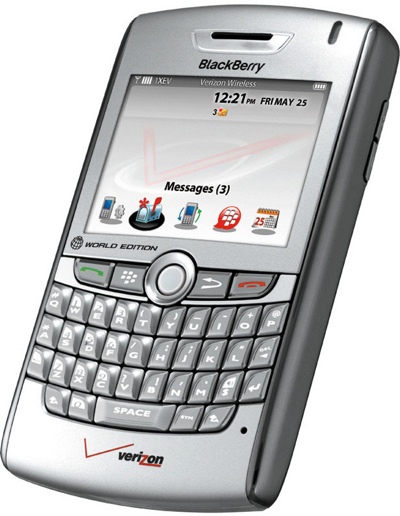
Why We Got the Blackberry - and Dumped the Treo

A week ago, we went over to the Verizon Wireless store to pick up the Blackberry for each member of the US team. I made the decision to take people off their existing plan and phones for a simple reason - quality and control. I wanted to make sure each person could be connected to the clients and the company at all times. We needed a mobile experience where everything worked seamlessly - no reboots, bad voice quality or botched data transfers. We had already gone to an Exchange hosting service to ensure reliable email delivery and integrated calendaring. Up till now everyone had a different phone, different service and individual patterns of access. Now it was time to complete the circle.

Because our team is around the world and our clients are dispersed around the country, time in the office does not reflect a true workday. Work can take place in the middle of the night or early in the morning. If the client has an issue, you need to know right away and respond quickly. We could not afford to waste a moment or give the client a poor connection. Since we are responsible for spending client money, they needed to be assured that the team was on top of things regardless of the situation. There was no excuse for a Client Manager to be out of the office and not receive a critical client email.

This was important after the Treo 700p nightmare that I went through. Great features, poor execution. Reboots happened every day because the damn thing froze all the time. Sometimes, the Treo would reboot when I was in the middle of a call. The Bluetooth connection was uneven. It was maddening and that was even after all the integration and improvement that I got when we implemented the Good Technology software and service. It was as if the people at Palm jammed a bunch of features in to make them look good in product comparison, but they forgot that if the phone is unreliable, you tend not to value the feature. This was the old Microsoft way - fill up the data sheet but don't worry about quality.

Reliability is an expensive investment and difficult to quantify, but people are willing to pay for it. This is what I have seen with the Blackberry 8830 - no crashes, no reboots and amazing integration. Great spell correction, decent voice dialing and just a lot of little touches. Voicemail dialing was preprogrammed. I didn't have to figure out the pauses before auto entry of the password, it gave multiple options in terms of how to contact a person, and the screen is fantastic. As much as I miss the camera, I especially like the idea of getting data access wherever I go around the world. This phone works with GSM and CDMA. Let's also not forget the huge number of free apps for the Blackberry. It makes things a lot easier - from the weather app to Google Maps to Facebook Mobile. I'm still learning all the things I can do and customize. Right now, I'm testing the Jawbone headset because my voice just doesn't carry with these headsets - just didn't get the deep voice genes :).

RIM focused on the needs of the business user with their product and service design. Palm was focused on competing with Microsoft CE and couldn't make up its mind on the business user or the consumer. Their OS is not built for reliability. Quality is worth paying for as is easy integration and functionality. It's not easy to sell, but just ask the guys at the store which phone gets the complaints - it's pretty easy. Email integration is critical for the business user, especially the ability to synch with Exchange & Outlook. That combined with the higher quality Verizon network means that my team is available everywhere.

Our Client Managers were especially happy about the 4 GB memory for their photo and music files as well as the ability to tether with their PC - that means connect their PC to the Net all the time. Then there's the Bluetooth headset and all the accessories. I want them to have fun. That means they're enjoying their job and they're connected - all the time.

This is part of the evolution of the company. When we first started, it was all about keeping burn to the absolute minimum while we figured out our business. Now that we have high profile clients and a proven model, we need to have the highest quality and efficiency possible.

Some people would say that now work is 24 hour. I say it has made work more fun because you can get things done anywhere.

Because communication is more reliable. I'm able to get more done and call more people. That's a good thing for me and Position2.

RIM gets it - execution matters...

Sunday, October 28, 2007

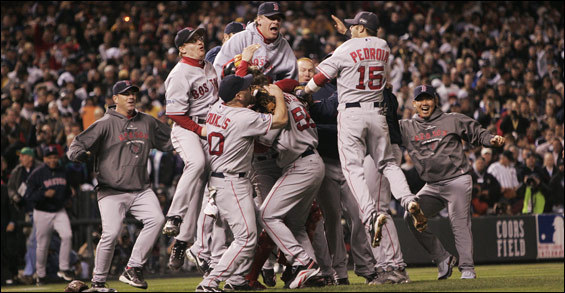
Red Sox Win the World Series!


What an amazing day! Watching the Red Sox sweep the Rockies for the second World Series in 4 years. This team was absolutely fantastic to watch. There was not any of the paranoia of the 2003 where every win was too good to be true. The 2007 was stacked with great veterans and with never-say-die rookies. So glad I got to see future greats like Ellsbury, Pedroia, Youkilis, Matsusaka, Okajima and Papelbon combined with stars like Lowell, Beckett, Schilling, Ramirez and Ortiz. Hell, even Lugo and Drew came through. Francona and Epstein, thanks for putting together and running a dream team that made this season super fun to watch. These are one of those times to treasure, because you may never see your team in the World Series for a long time - much less win in 2 sweeps.

Now, time to get some rest. This stuff takes a lot out of you!

Sunday, October 21, 2007

Red Sox Win!!!


Right now there's no better time to be a New England sports fan. The Patriots are dominating, the Celtics are stacked and now the Red Sox come back from behind - to go to the World Series! Today, the whole family was on edge. The game was so close, a nail biter, until the 7th. Ellsbury was a absolute spark plug. The Pedroia gets up to bat and pow! A 2 run homer. I was sitting there with Sanju and Arjun and told them with absolute certainty, "He's gonna get a homer." And Pedroia delivered - a rookie. It just goes to show that experience means nothing - it's what's in your head and heart. The young guys delivered for the Red Sox - Pedroia, Youk, Ellsbury, Papelbon and the unbelievable Beckett. What an amazing team.

It's better that this team came back from being down. They will have something to draw from when the chips are down. It will be the thing that should make them stronger against the Rockies.

Another 4 to 7 games of baseball. Woo hoo!

Monday, September 24, 2007

Union Stupidity

For over 20 years, US auto industy has been in decline. Part of it is due to poor product development and quality. Part of it is an inflexible work force. Now, while the US-based auto companies are reeling from a decision not to build fuel efficient cars, the unions are striking again. The unions are concerned about continued job losses and want job guarantees. GM is concerned about a $1500/vehicle health care cost differential due primary to a small work force carrying a large retired base. In trying to deal with the union in the past, GM management has acceded to stupid measures like the Jobs Bank where union workers are paid to sit around.

Meanwhile, Japanese auto companies continue to grow, with Toyota overtaking GM. They are growing worldwide and in the US. Because the transplant work force is not unionized, the US players are at a disadvantage. The Japanese get great flexibility with labor.

It's time to change the game - grow the pie rather than slicing it. Working with the union should not just be about greater leverage vs. the employer, it should confer advantages. Things like a trained workforce, greater management of benefits payouts, greater retention of skilled labor, etc. Unions should act like partners rather than adversaries. Now GM's supply chain will grind to a halt, throwing thousands, with suppliers, millions out of work. Toyota will chug along, GM will lose a tremendous amount of money.

The unions cannot erase past poor decisions, but at least they can find a way to make their companies more competitive.

Wednesday, August 22, 2007

Paint My Fence


Do you remember the Tom Sawyer story about how he got neighborhood kids to paint his fence for free? Tom made it look so fun, they were dying to do it. In fact, they paid him to do his work. I couldn't help but have a smile on my face today as Manju from our company got visitors to our SES booth to paint our fence. Around us, people we giving away pen, toys and iPhones. However, the crowd around our booth came in to learn about our services, buy a book and have an invitation to a free (for now) Search Engine Marketing Seminar.

We ended up selling a ton of books and overbooking the seminar. People are truly hungry for this info especially in bite sized chunks. For us, we get to educate the community and get more highly qualified prospects - people who see clear value for them. We are OK with sharing our knowledge because deep experience and execution matter more. Because of our infrastructure, people could never afford to compete whether inhouse or as an agency. If they walk away with something that helps them well then we have a better image. This can only help in a highly connected region.

Before, we would give away books to those who were "qualified" but since when did you ever read a book that was given to you for free? How many of you actually go to the library? So go ahead, give away your pens, yoyos, shirts and doo-dads. Most people will simply give them to their kids or throw them away. Come to our booth and get yourself a book at the 30% off list and signed by the author!

Now the money off the book did not make us very much money compared to the cost of the show, but it was a classic trade-on. Viral or Web 2.0 marketing is about getting others to paint your fence. In this case Manju at Position2 was the clear winner.

Tuesday, August 21, 2007

Search Engine Strategies - The San Jose Bash

Just came back from Google Dance - a massive party done up like the bashes of the Bubble Days - dancing, karaoke, beach volleyball, food, beer, wine and free T-shirts. Oh, and you could also talk to various Google engineers about new offerings. There were even party crashers that even went out of their way to get SES badges so they could get in. Why be a wedding crasher, when you can be a corporate bash crasher? It was fun to soak it up with Microsofties and Yahooligans at their competitors expense... though I'm sure someone at Google is justifying that as a show of dominance or invitation to join.

The SES show was better than in previous years, specifically in terms of the research data and the multimedia SEO content. Last year, tagging and social networks were all the rage. Now it's old news. Google Universal is all the rage given how it will change the look and feel of search engine results as well as what we do with SEO. The Golden Triangle is breaking to the "E". It goes to show you that the game is not really over. As much as Google is dominant now, with broadband media taking shape, it does not mean that it will retain dominance. Hell, I even met a company putting together an "answer machine" based on chaos theory. If only the founder could explain it like Charlie Epps in NUMB3RS.

Based on last year, I did not really see this as a show about getting any leads, but I'm told we received quite a few. I saw this as a way to stay ahead of the curve, get sources for our upcoming books & seminars, and establish our brand firmly in the Bay Area. Little did I know that Manju would actually offer our book, Insider SEO & PPC, for sale. By selling it instead of giving it away, people realized its greater value. Moreover, as part of our education effort, we also promoted our upcoming Search Engine Roundtable in Santa Clara on August 30th. Yeah, it's free - for now!

I'll be writing a lot more about the specific sessions I found interesting, but this is a golden time for anyone to be doing something on the web. For those who want to break through with media or run an SEM agency (good luck doing all this inhouse), these are exciting times.

Friday, August 03, 2007

Position2 Rolling

The progress continues at Position2 with some excellent new client sign-ups. Our new bid management tool is showing excellent results for our clients. Check out new sites that have just gone live with Clubspaces and ResponseLINK - our designers, developers and SEO team have done a terrific job.

Thursday, August 02, 2007

Rush Concert - With Son

Today, like many who lived their music days I went to the Rush concert at Shoreline Amphitheater. There were many like me - many gray haired and balding - but enjoying every second of "Freewill" or "Subdivisions." We did, of course, sit down during parts to rest our feet.

Arjun, my 11 year old son, had a blast. He's an old soul who enjoys Papa's music. We listen to "Rush's Greatest Hits" on the stereo. So, like me, he knew the old ones from "2112" and "Hemisphere's," but really not much past "Grace Under Pressure. " Of course, we had a blast during "Tom Sawyer," "YYZ," and the mega Neil Pert solo.

It's kind of funny... I never would have dreamed of going of a concert with my father. He was from India, so he didn't relate to rock n' roll. We're very close, but there's this generational distance when it comes to culture. I wonder if I'll deal with the same adolescent rebellion that I put my father through, because this kid actually likes the same things I like.

What a dream that would be.

Monday, July 30, 2007

How a Well Connected Industry Gets a Free Ride

I love the business of business, especially entrepreneurship. However, nothing is worse than a free ride on our tax money. In the NY Times article, "Energy Bill Aids the Expansion of Atomic Power Plants," there's a little known provision tucked into an energy bill that has government guarantees for the nuclear power industry. Essentially, the "Department of Energy would be allowed to guarantee 100 percent of the loans and up to 80 percent of the total cost to build a reactor." That's to the tune of $25 billion!

What? So utilities get guaranteed loans. No risk for them. Pay too much, pick the wrong technology, overestimate the market - hey no problem. We the taxpayer will take care of you. All of us entrepreneurs have to schlep on bended knee to investors and banks who assess their investments based on risk. But the nuclear industry gets a free ride. How wonderful is this? Be an industry exec and get paid a lot to take no risk.

I'm all for incentives and sometimes a subsidy if it is in the national interest. Nuclear is a part of the energy equation - especially in a carbon threatened world. However, this is absolute bunk.

No risk, no return - last I checked that's the difference between business and government. If companies like GE and Exelon need a free ride, then there should be a price for it. If you need a government guarantee to do business, then you need to take a government salary. Or you need to give up a commensurate amount of equity warrants to the Social Security trust fund. If the taxpayer is going to fully guarantee a loan to build a reactor, then there needs to be equity upside for the risk the taxpayer is taking in return for our risk and the lower interest rate from lenders.

Now don't start me on how big money has bought our politicians...

Sunday, July 29, 2007

Sicko

I had the opportunity to watch Sicko during vacation. It was very interesting to see Michael Moore's treatment of a subject that affects so many personally and is also now 1/7th of the US economy. What is very striking is how so many are caught up in denial of coverage and reimbursement. This is contrasted with the examples of Canada, UK, France and Cuba where medical coverage is free and in the movie - effective for the citizenry.

I was fired up enough about the film to do something about it. Given that so much of the US economy is intertwined in healthcare, it is unlikely that the single-payer government run system will actually take place anytime soon. But something is coming from my company that will enable Americans to get better care at lower costs - you'll see in the next 6 months.

Tuesday, July 10, 2007

Lou Dobbs the Demogogue

While working I had the unfortunate opportunity to listen to Lou Dobb's immigration demogoguery about Hillary Clinton's "ties to India" due to work with the Congressional Indo-American causus. He makes it sound like the Indians (italics for emphasis) are stealing jobs from Americans for getting H1B visas. And, oh many of them, stay. Last I checked, getting an H1B confers no citizenship rights, but you still have to pay US taxes. Many of these Indians have graduate level educations in science and engineering and stay to create new American businesses. Hey, they could just stay in India and start the businesses there. What is worse is the way he says Indian, like it's some kind of slur like a conservative saying "liberal."

Oh, by the way, after the attack on Clinton in the trailer, it was pointed out that almost 37 Senators and 118 Congressmen are the Indo-American caucus equally split between Republicans and Democrats. Yes, it is a good idea to align with a successful ethnic group and a large, fast growing democracy.

Let's be real Lou, globalization is all around you, being a curmudgeon is getting old.

Monday, July 09, 2007

How to Force Pop Ups

It's interesting how 2 properties like the nytimes.com and boston.com (Boston Globe) both are owned by the same parent, yet one makes more off of me than the other. Due to the quality of the writing, the nytimes.com gets a lot of more of my viewing time, yet I see more of boston.com. Here's why, I allow pop-ups from boston.com because they have cool slide shows and polls of the Red Sox and Patriots. It's not video, but I get to interact with the content, I enjoy seeing how Ortiz gets a 'B' for a .321 average vs. Pedroia an 'A' for a .315 average (it's all because Ortiz doesn't have 20 home runs). With the NY Times, there's no compelling reason. With Boston.com, they have in-depth coverage of my favorite teams, so I'm willing to put up with those ridiculous expanding ads and fly-ins. I actually don't mind it as long as they keep giving me detail about Youk and Pedroia.

I have all the necessary ad blocking software in Firefox, Norton, and a spyware package.

So there's the lesson of the day: you too can push your way into the users face if your publication can produce compelling content in a useful format.

Sunday, July 08, 2007

US Trade Deficit Marketing

Anyone who follows business and news constantly hears about the fast growing US trade deficit with the world. We are led to believe that this is a consequence of a highly developed post-industrial economy. Given the growth of China and its labor cost advantages, it is only natural that goods would be produced there and shipped to the US. Consumers benefit through lower prices and generally increase their skills to a more service-oriented economy.

While this makes some logical sense, the data does not support this point of view. Go to the last page of the Economist (July 7, 2007) and look at some of the tables:

Country Current Account GDP Budget Balance
($ bil) (%) (% GDP)
United States -803 -6.0 -1.4
Japan +187 +3.4 -4.4
Germany +168 +4.9 +0.3
Britain - 93 -3.2 -2.8

Those are large developed economies. Now some fast-growing ones...

China +250 +8.1 -1.3
India - 10 -1.8 -3.3
Russia + 87 +5.7 +2.4

Oh yes, and here's the big winner...

Saudi Arabia + 95 +21.4 +16.6

The US has gone for a creditor nation to a debtor nation. Imports exceed exports. There's a significant budget deficit because the deficit does not include future Social Security and Medicare liabilities. Meanwhile developed economies like Germany and Japan have fund inflows greater than it's deficit. Look at the numbers. They are fully developed nations that are net exporters. Unlike the US, they have retained their manufacturing prowess. The US is a great economy - still the greatest and most innovative in the world, yet it is ceding its advantage due to it's twin deficits. For now, trading partners are balancing US accounts by purchasing Treasury bills. However, the US cannot rely on this forever. When countries lose interest, the US will need to keep it's interest rates artificially high to attract foreign investment. That will hurt US businesses and consumers.

The above data shows that great economies do not need to run deficits of any type. It also shows that fast growing developing economies do not necessarily need to run large surpluses. However, those with large surpluses like China and Saudi Arabia can exert pressure on the countries they have their money in.

So don't buy into the marketing. The US can do much better.

Saturday, June 23, 2007

SEM Rountable at Norwest Venture Partners

On Thursday we gave a 2 hour seminar to Norwest Venture Partners' portfolio companies on the shift to search engine marketing and how to win with SEO and PPC. We were pleasantly surprised by the level of interest. We had to have 2 sessions with execs looking to use the medium to build traffic, leads and sales in a results oriented manner. We are now talking to a number of folks who want additional information.

I'm going to take this to other of my VC friends as there's a lot that VC companies can do to get attention in new, emerging or even mature markets using SEM. Traditional notions of brand have changed dramatically to attributes. The web is truly a democratizing place. With the change coming with Google Universal Search, there is much that companies can do to win. Same with PPC - it's changing all the time. We're actually beta testing new optimization techniques with the majors.

We'll be posting many of the slides and the audio from the presentation. Look out for them!

Wednesday, June 20, 2007

Microsoft Agrees to Change Vista to Accomodate Google

Today Microsoft agreed to change MS Vista to accomodate other desktop search engine's like Google's Desktop Search. Microsoft's version will remain but will allow the user to have another search engine there. They will also publish info on how to improve performance.

It's interesting how Google is exerting it's power to influence the DOJ to move so quickly to force this change. At a $160 bil market cap and through smart lobbying, Google has emerged in Washington as a force to be reckoned with.

If only they spent their effort improving the rudimentery Desktop Search. Try using it. It does not have the features of the search engine like concept based search or even spelling correction. You have to have an exact match for it to turn up any results. If you move a file in Outlook, the Index is not updated. It is cool that it looks at web based Gmail in addition to your desktop, but it still does not designate if a file is attached to a result - a major way of differentiating hundreds of similar sounding files. There are no filtering mechanisms. If you are using the tool for email search, you are better off carbon copying all your mail to Gmail and then using it exclusively.

While I have not tried Vista based search, I'm hopeful that Microsoft has taken advantage of this. The technology to do this well is over 10 years old. We at AltaVista did a better desktop search than Google has today. The problem is that we did not promote it like we could have with a pay the supplier sort of model.

In any case, this is definitely a way that Microsoft could slow and maybe turnaround its decline in search market share. I'm sure that Google will not sit back forever and wait.

Monday, June 18, 2007

Semel Resigns

In a breaking NY Times article, Semel resigns as Yahoo's CEO and is replaced by Jerry Yang, a Yahoo co-founder. This is not surprising as Yahoo was having a difficult time with revenue growth and cultural issues (see Brad Garlinghouse's Peanut Butter memo).

As a search marketing agency, seeing Yahoo adrift is not something to celebrate. The populace is better served when there is real competition in the marketplace. Having Google dominate is not good for the user, media or for Google itself as the desire to innovate dimishes with growing share. This happens regardless of who is in charge.

There are many reasons behind this, but there's an exodus mentality in the once highflying company. People feel strangled by a culture that has stifled innovation and is living the blame game. From my experience in a company that strayed from its core strength, AltaVista, I can tell you that search needs to be managed differently than a content site. You can't let the business guys run a search site. Super smart, passionate engineers are more important. It is an area with incredible investment, where developmental impacts are difficult to quantify and assess. Yet, each small improvement cumulatively improves the experience.

Doing competitive rack-ups is a waste of time as well, because features don't really matter. 95% of searches are web searches so you need to really understand what users are looking for and have measurement tools that analyze activity in detail from inputs like the toolbar. Then you need a process whereby that analysis informs the engineer about improvement they can make to this n-level product development beast.

You need to think super long term. Quarter to quarter revenues are not really of any value. For example, it is more important for an ad to lend value to the natural search results on the page than for the company to pump short term per page revenues. You need to pump money in for a long period before you see an impact.

This is what Google has successfully done - focus on the engineering and invest for the long terms. Because Yahoo's management was more media-oriented, it has had a difficult time. Hopefully, this change will allow Yahoo to regain its footing.

Saturday, May 26, 2007

How Google Makes More Money on Your Content

Recently, Google announced universal search where it would be integrating video, news, image and other results into Google search results. In and of itself it's a good user-centric idea because very few people actually click the tabs to other sections. Something like 95+% of all Google traffic is still Google Web Search.

However, now Google has found a way to make more money on its ads while retaining you on its site. Try the search for "zelda spoof" produced by our friends at EffinFunny. There, you will see on result 3 the EffinFunny clip.

Now click on "Watch Video"... That's right on the same Google results page, you will see the video through the YouTube player.

That's triple advantage Google:

1. Google's search ads are still displayed on the right side, click there and more cash flows to Google.
2. YouTube gets promoted - not bad for a Google property
3. Google gets to increase it's stats for "time on site" a metric that influences how much advertisers play.

Now when Google integrates DoubleClick, they can also display branded banner ads as most ads for video content is less context-driven and more brand driven. They will also be pressured to prioritize content on their site over others. Google is already engaging in cross-selling by showing the Google Checkout icon next to users of their Checkout service drawing your eye to the result.

Most importantly, even if the originators of the content - in this case EffinFunny - would have less of an opportunity to monetize their content. They can look more like a portal disrupting their implied partnership with site, "You make money when they click. We make money on ads next to your listing."

Hopefully, Google is smart about this and finds ways of sharing revenues and not prioritizing YouTube over others. But as you get bigger and more MBA driven, that does not necessarily happen. It's not a medica concentration monopoly case yet, but 5 years from now, it may be...

Saturday, May 19, 2007

Tesla Motors - Pure Marketing Insight

There's a lot of hype about Tesla Motors. The new wave electric car looks fantastic and is backed by Elon Musk (founder of PayPal and Zip2), Sergei Brin and Larry Page and a bunch of Silicon Valley venture capital firms. This is looking like the 1 electric car that will be successful. Why? Because it is designed to leverage fundamental technologies like lithium ion batteries, lightweight aluminum components, highly reliable electronics, and electric motors to build a beautiful sports car that already has a waiting list amongst the rich and famous.

That's what most would make you believe. What it's really about is that the founders Martin Eberhard and Marc Tarpenning saw the market for this using the Silicon Valley technology lifecycle mindset. Build a product that people really want. Essentially, they knew the difference between niche marketing and mass marketing. In the past, people would try to build an electric car for the masses to satisfy regulators. GM's failed EV1 electric car is a perfect example of an underpowered, overpriced, low capacity vehicle that people did not really want unless they were willing to make lots of sacrifices. Instead Tesla's founders decided to give people what they really want - a fast car that looks fantastic and has the kind of range that fits the class of car that the target buyer would want. They used the strength of the electric motor to build a better car. It's classic "Innovator's Dilemma:" build an exclusive sports cars on a Lotus platform that can go from 0-60 in 4 seconds with over 200 miles range on a charge. Oh and as a bonus, you get low operating cost of 2 cents a mile and a car that would need low maintenance as with an electric motor there's only one moving part - the rotor. No fan belts, radiators, spark plugs, valves or muffler this was a simpler machine.

Moreover, they saw the marketing advantage that comes from building something a head turner that is exclusive to the wealthy few. With so many conscious about climate change and reducing dependence on foreign oil, this is an easy purchase to feel good about.

Tesla can march down the cost and learning curve of integrating these technologies. They can learn more about how these come together before the pressures of volume and a mass audience. Theyh can learn about what feature as most important to actual buyers.

Tesla has used a Silicon Valley approach to building the product by outsourcing the components from many suppliers and having the car produced by Lotus. That's right, this car company has less than 80 people - that's amazing.

They've done a brilliant marketing job by making this a competition to get on the waiting list. Typically, you don't want to be the first one to deal with the inevitable first production kinks. Now people are fighting for their place. Tesla's site is high end with a great product configurator. They marketed themselves well by getting reviews from a wide array of reviewers early in the process to build buzz. Their blog has an excellent variety of posts from the CEO on down. Obviously, people are reading it as there is a long line of comments for each post.

Telsa has turned the traditional negative trade-off notion of the electric vehicle on its head. Electric is the trade-on.

I can't wait for the 4 passenger version!

Wednesday, May 02, 2007

Can't Deny This About Bonds

Tonight Barry Bonds hit his 9th home run of the season and is now only 12 away from Aaron's record. Whether he once took steroids or not, no one can deny he is one of the greatest home run hitters of all time. With all the scrutiny and drug testing, he is hitting .345 at the age of 42 and on a ridiculous home run pace of 60.

Everyone thought that with his last 2 injury-ridden unproductive seasons that it was the effect of the new drug testing program. When the steroids are gone, the production would fall. Well, that has not been the case. Bonds is better than ever.

Say whatever you want, he's a great player. I plan to go to a few this year.

Tuesday, May 01, 2007

Simple Governmental Rules to Reduce Emissions and Decrease Foreign Oil Dependence

As many of you know, I'm a fan of the free market and less regulation, but given the need to reduce dependence on foreign oil and limit global warming emissions, there are 4 inexpensive items that the DOT and the EPA could adopt for vehicle owners. Each on their own would have significant impact, but on a network wide basis could have a substantial impact on reducing oil consumption and costs to American consumers:

1. E85 everywhere: If each vehicle by model year 2010 could be mandated to be E85 certified, it could allow the US to have greater flexibility against future increases in oil prices. The cost is relatively minor as it's about adjusting fuel lines and gaskets - less than $150 in parts. It would also provide a market for fuel stations to provide ethanol-based pumps to stations around the country. In Brazil, they have created an incredible market for sugar, benefiting their own farmers and countrymen rather than those from unstable oil-rich countries.

2. Tire Pressure Sensor: This would do 2 things, reduce potential accidents and improve gas mileage. Having an accurate tire pressure sensor system could could have an incremental yet significant cumulative effect on gasoline consumption. A few percentage points reduction that change the supply demand picture dramatically. How much does a sensor cost? Very little in mass production.

3. Laser Guided Cruise Control: Cruise control is a nifty little feature when the reads are uncongested. However, anytime there's a little bit of traffic, it uses utility. Laser guided systems slow down to match the speed of the car in front of you. It slows down faster than a human would, making it especially useful in when there's a slowdown. There are studies that have been run that show that if 20% of cars were using this feature, it would reduce traffic congestion dramatically as fewer cars would jam the brakes and cause the typical cascade effect. In many cases, it could eliminate certain areas of congestion altogether. This would have 3 impacts - 1. Increase gas mileage as there would be less idling, 2. Increased productivity as less time would be spent on the roads and 3. Longer road life as it effectively would increase capacity.

4. Electronic Toll Sensor: As inefficient as tolls are from an economics point of view, they are reality. If every car had a toll sensor that would automatically debit a driver's account, it would cut toll congestion dramatically and speed travel throughout the country. We should pick a standard and make it nationwide.

All four items presented about are relatively inexpensive, especially if mandated in volume. It could have dramatic impacts on fuel consumption, leverage with oil producing countries and our quality of life. A 10% increase in fuel efficiency could dramatically impact prices especially during scarcity. Before we change the world with hybrids and hydrogen, why not implement these changes now.