Thursday, January 31, 2008

Search Spend Way Up Though Economy Flat

In a previous post, I discussed how SEM would actually do well in a recession. Well see this NY Time article. Key quotes:

"Google said it has seen no effect from a slowing economy on its advertising business, as it reported a 17 percent jump in profit and a 51 percent growth in revenue in the fourth quarter...

Remember, the US economy grew an anemic 0.6% in the 4th quarter.

“We have not seen any impact as of now,” said Eric E. Schmidt, Google’s chief executive, in an interview Thursday afternoon after the financial report was announced.

"Mr. Schmidt said he had yet to see weakness in any advertising category.

Bottom line: business has to advertise. Search is more results-oriented and therefore harder to cut in lean times.

Monday, January 28, 2008

Web 2.0 Conference - Social Media

See me speak during the WebGuild Web 2.0 conference. I will be on the Social Advertising and Social Media panel discussion at 1 PM. My focus with be on practical examples of how to use Web Outreach and Social Networks to grow awareness for entrepreneurial & growing companies. This will include Effinfunny and ResponseLINK.

Stop by and ask a question or 2.

Ted Kennedy Again

I was there when Ted Kennedy ran in 1980. My father loved JFK and felt tremendous affection for all things Kennedy. When he lost the NH primary and walked into the Manchester, NH office, he electrified the crowd. It was exciting to be 12 and feel the energy in the room, except...

In 1980, he upended the incumbent, Pres. Jimmy Carter, in a show of ultimate party disloyalty. Carter was dealing with a difficult economy, high interest rates, high inflation, and the Iran hostage crisis. I remember how he had all that momentum behind him until that article came out in Reader's Digest about Chappaquiddick incident. I'm sure that Kennedy did not make it easy for Carter's run when he fought it all the way to the convention.

Now he's considered a great senior Senator. No one doubts his dedication or his desire to help the working man, but to jump in over a tough campaign seems irrational. That's what primaries are all about. Get the tough stuff out there, so that people are battle ready for the general election. He has the right to advocate for whoever he wants, but to do it because of a hard fought primary?

Sunday, January 27, 2008

The $150 Billion Waste of Money

Many are concerned about growing signs of a recession. The same administration that went on for years on a tax cutting and spending binge is now working with Congress to do a cash giveaway to get people to spend more money. Fuel prices are up. Biofuel demand is pushing up fuel prices up. The savings rate is negative. Inflation and unemployment are up. Would giving people a relatively small slug of cash spare us a recession? Does this make sense?

The real answer is no. $150 billion is small change in a $10 trillion economy. It is unlikely to move much of anything. People will buy some things and maybe that will help some folks, but it is not a consistent behavior over time. Consistently more money in people's pockets will lead to more spending, however is this the behavior we want? We've actually had a stimulus for some time. It the Iraq and Afghan war - to the tune of $1 trillion since 9/11. This money has flowed largely into the US economy to pay for military equipment and personnel.

What we are really doing is adding more debt to the economy. This spend-heavy generation has burdened our children to the tune of $29,000 of debt for every man, woman and child. We can't really just grow our way through it as the US is a mature economy with a long term growth rate of about 3%. We have underfunded Medicare and Social Security to such an extent that the real deficit is even greater if we used corporate accounting.

How did it happen?

Interest rates held down too low for too long + subprime fueled easy money and massive spending. People levered up on debt to go on a spending spree. They didn't read the fine print on their adjustable rate offers. This was exacerbated by tax cuts. They kept buying more expensive homes, some got into McMansions. Oil prices are 5x higher than just 3 years ago. To reduce oil consumption, the US is pushing ethanol, so that is impacting food prices. US spending on imports have led to massive growth in China, and to a lesser extent, in India. Salaries are rising. As Greenspan says, the price depressing weight of globalization is diminishing as overheated demand in fast growing developing economies raise import prices.

Now the bubble has popped. Homebuilding is way down with a massive amount of unsold inventory. Foreclosures are way way up. Inflation is finally recognized as rising in official reports. Worse, the subprime crisis has dramatically tightened lending. If this continue, people will not be able to refinance to lower rates. If the value of your house is down, no bank will lend you money even if you are carrying the load at a higher rate.

The US needs to move away from debt. We need to realize that we are a fully developed economy. Trying to grow out of debt just loads up obligations on future generations. The growth is just not fast enough to make sense. The US needs to be strong. Capital should not be used to prop up the US government, rather it should flow to private sources, lowering the cost of capital for all.

Moreover, savings should be encouraged, not spending. People who save can take risks, can start their own business or deal with an emergency without going to the government for a bailout.

So it's one thing if the Fed drops interest rates to spur growth. That's a significant macro effort as it impact everything from mortgage interest rate to corporate borrowing rates. A $150 billion giveaway leading to a slug of one time debt is not the answer.

It's time to get our house under control.

Wednesday, January 23, 2008

2008 Olympics Will Expose the Price of Growth

A recent NY Times about the Beijing smog discussed the concern of athletes about the impact of pollution on their ability to complete. The US team physiologist, Randy Wilber, is recommending that athletes where a mask to particulate filter as the Beijing air has pollutant 5x greater than WHO levels for safety. The marathon world-record holder Haile Gebrselassie has allergies, and the world’s No. 1 women’s tennis player Justine Henin has asthma.

I ran the Mumbai Marathon in 2007. I thought it would be exotic and kind of cool to run in the country where so much of our business was. The heat was one thing. The pollution was another. Even though Mumbai has oceanfront and the marathon was on a Sunday, it definitely had an impact on me as much time was 30 minutes slower than previous marathons. In addition my shoes had a clay like tint even though the streets were thoroughly clean.

The IOC should really think about where it stages the Olympics. Developing countries are great, especially since they provide hope and inspiration for the country's citizens. However, rapidly developing countries like China and India are willing to sacrifice the environment and their citizens' health for growth and prosperity. Remember the US clean-ups began in earnest as little as 40 years ago. Yet, that is no reason to sacrifice the health of athletes. As exciting as it is to have the Olympics in China, will it be worth watching great competitors ruin their health?

Tuesday, January 15, 2008

Advantages of Using a Marketing Agency

Market researchers like Forrester and iMarketer are estimating 20+% growth per year over the next 5 years. The field is changing rapidly with Google and Yahoo changing algorithms for natural and paid search. Social networking is creating rapid change in how companies can reach and retain potential customers.

With so much growth and change, should you go in-house or hire an agency? Depending on the size of the company and the ad budget, there is a mix of answers. If you are going to invest any decent level - at least $10,000/month, then having an agency in the mix is essential.

Here's why:

- Expertise: Search agencies have multiple clients frequently from a wide variety of industry. This creates strong bonds with search engines as well as a push to know as much as possible about the industry. We have clients in medical services, consumer products and software as a service. Due to our business volume, search engines beta test PPC algorithmic changes with us. Our own clients inform us of things they learn. New firms like blog rating and aggregation firms are contacting us. In addition, we are attending and presenting at the top industry forums.

- Technology investment: To ensure clients reach maximum potential, search firms invest in technology - either on their own tools or from tools firms. Due to experience with a variety of clients, agency teams can apply best practices from one industry to another and then embed that in technology. Clients could purchase the technology themselves, but unless they are very large will not know the underpinnings of it in detail. Imagine letting a black box manage your money without understanding how it works. I'd rather have a skilled operator who knows what the underlying algorithm are and how to modify them.

- Operational processes: The best firms have operationalized their processes and are continuously innovating. This allows the agency to provide top notch services along the wide range of services that make us search marketing. The range of competencies include online strategy, ad creative, media planning & buying, bid management, web technology & development, analytics and project management. There is serious complexity in getting the best people and getting them to work together efficiently and robustly. Each client has a different strategy or industry, therefore the process has to be robust enough to deliver results in a customized manner. We measure every step in detail to learn and improve.

- People and Turnover: Top marketing, technology and operational people are attracted to agencies because of the variety and the ability to be on the leading edge. They enjoy the training and the learning experience. In addition, there's the opportunity to try new things. Imagine getting paid to play on Facebook? Or developing cool algorithms to model bid pricing behavior? Or writing copy for rock band texting one day or source code optimization software another? Agencies can hire people across niche competencies and create a symphony through robust processes. Unless a company is large, hiring the variety of talents is impossible. Even then, how would you get the experience you get from variety. This is why almost every firm hires outside counsel. In addition if you hire in house, you are subject to turnover. While there is turnover in agencies, our processes are designed to retain client knowledge through multiple levels from executive to client manager to deliver manager. We know there will be turnover, so we build systems to retain knowledge.

- Value and cost: The best search agencies have operationalized their processes to provide value from top notch people, processes and technology. Well designed processes should provide a cost advantage vs. going in house. A copywriter will cost at least $50k/year. An SEO specialist starts at over $60k. With our worldwide infrastructure, we go a step further. We can provide a whole staff for the cost of a full-time equivalent knowledge worker. For many firms, our client manager is equivalent to VP of Online Marketing and reports to the President. On top of that there's a whole staff behind them that executes.

Are there reasons to go in-house? Yes, but not completely. Many times in larger companies it makes sense, especially if there are large groups to coordinate or multiple products. I would not recommend completely going in-house because of the loss of leverage from industry knowledge.

So these are the main advantages of a search marketing agency vs. going in-house: expertise, technology, process, people, value and cost. With so much change in this new exciting media form, you cannot afford not to use a top, results oriented agency.

The Position2 WebEx Makeover

Bill Ross, our Director of US Sales, was interviewed about how we used WebEx to improve our cost of acquisition and volume. They are doing this one day at a time. Here's our first day:

Sunday, January 13, 2008

Recession and Search Marketing

There are growing signs of a recession in the US. The subprime crisis has caused banks to cut bank on lending while they revalue their assets and seek liquidity. As a result foreclosures are up and today the NY Times reports that spending has slowed significantly. The national savings rate is low to negative because people relied on increases in home equity to spend. It looks like the American spending machine is going to take a breather. High nergy prices have cascaded throughout the economy. Even food costs more as rising ethanol production is increasing the price for food throughout.

What does that mean for those in the search marketing space? Typically marketing budgets are the easy places to cut when sales drop. It tends to be a discretionary activity to slice back on to help hold the line on costs. For search marketing, this actually should not happen. Unlike other forms of marketing, it is search marketing is the most measurable method of marketing. You can study each step of the process from click to lead to close. You know the numbers at each stage of the process whether is click price, cost per lead or cost per sale.

Rather than spend on a significant TV campaign where returns are distant and difficult to measure or highway billboards, crank up your search marketing budget. Run more campaigns because you know what you are getting for your marketing dollar.

I'd love to get some feedback on this...

Thursday, January 10, 2008

The $2500 People's Car

Today was a momentous day - the introduction of the Tata Nano - a car priced at $2500-3000 that will open up the auto market for the masses. This could be the 21st century Model T. I couldn't help but be excited by the fact that it took an Indian company to create this kind of fundamental innovation.

Here's a link to the article: http://wheels.blogs.nytimes.com/2008/01/10/tata-nano-the-worlds-cheapest-car/

Here's my comment to much of the unusual criticism:

This is a huge milestone. I’m impressed that this came from an Indian company rather than a Chinese one. It demonstrates out-of-the-box thinking in opening up personal car travel for a whole new market.

As a person who frequently travels to India, this may not have all the terrible consequences that people imagine - much of which is hypocritical.

Rather than that family of four on a little scooter, this would be a heck of a lot safer. A lot of those scooters and rickshaws emit some ugly stuff. This would actually burn cleaner with a lot less soot. Maybe a lot of those rickshaw drivers would buy these vehicles instead allowing for safer, faster and cleaner travel (really hope they have a natural gas option). Vehicles may actually stay to their lane with fewer scooters and rickshaws. It’s a bit freaky when you see scooters, motorcycles, rickshaws and cars cram into every available inch of space.

People may now expect a better travel experience than before. There might be more demand for newer, cleaner burning buses and mass transit. There might be demand for better infrastructure and more effective traffic management.

120,000 rupees is a little over $3,000 dollars. It’s still expensive for many, but they have made vehicles affordable for a wide range of people. This would allow greater mobility and greater participation in the workforce. Right now, it is hard for a woman to work evening hours because the transport options are limited - understandably, scooters are not a great option at night. Hell, maybe we’ll buy a few so that our folks who work late can go home without a problem.

Congratulations to Tata!

Wednesday, January 09, 2008

Position2 Scores with Large Clients

Every firm wants to have a set of large brand names with multiple billions in revenues. It gives everyone a sense that the firm is solid and produces quality services. Well imagine waking up in the morning after running your business for 2 years and knowing that you had the following big names:

Johnson & Johnson
Northwestern Mutual
EBay
MIT
Reliance
Convergys
Cox & Kings


If you are from the US, you've definitely heard of the first 4. Reliance is a multi-billion dollar world wide conglomerate, Convergys, a multi-billion dollar IT services firm and Cox & Kings, a large UK-based India travel operator.

We also have a strong client base of fast growing companies with more added every month.

Tuesday, January 08, 2008

Hitting the Next Stage

I was sitting there with a group of CEOs discussing how to manage growth. How do you get to the next level? There are only so many hours in the day and people demand your time. This is such a fundamental issue. Many businesses hit a brick wall when they hit a particular size. They basically stop growing. This owner/founder is not able to hire a management team. He feels he's the only one who really cares about the other business. Everyone else is in it for the money, not the passion. He's tried to hire people in the past, but they just didn't work out.

The owner should look in the mirror. He is not acting as a CEO. He's afraid of ceding control. He's afraid that someone will take advantage of him and potentially lose his money. He's not willing to take the time to train his team, however qualified. It is first hard to hire a strong team. It is harder to work with them on making sure they understand their role. The hardest is letting go of decisions.

An interesting point was about deadlines. Some entrepreneurs don't typically like deadlines. They are working very hard to create something new. They can only work as hard as they can. They don't know what it's like to waste time. Many times they succeed because they are dedicated, however this is not scalable.

If you want to create a management team, you need dates. You need drivers who enjoy the motivation of deadlines. To make them stick, you need to hit them as well. You need to have incentives and consequences.

Imagine doing something one way for years, then changing by hiring sharp folks, ceding control and then changing the way you works.

This is why so few actually make it. It's hard to change, but the best know they need to mold themselves to each stage. Go from operational to strategic. Go from doer to the manager to the leader. Shift from becoming the operator to the teacher.

That's what it takes and you can do it.

A Great Day for America

This has been an exciting week for America. On January 3rd, Iowans voted for an African American - Sen. Barack Obama. On January 8th, New Hampshire voted for a woman - Sen. Hillary Clinton. This is the first time a woman and a minority have won a major primary or caucus in American history.

One day this will be commonplace. My daughter might have the realistic opportunity to run for President. She will not have to grow up with a glass ceiling. Can you imagine, not too long ago neither group had the right to vote. No matter what you believe, this is a historic day - one day of a historic year.

Bad Math Hits CNN

Americans need to learn better math. It's sad that kids are afraid of the stuff. It's scary when CNN allows bad math to get on TV. Roland Martin stated his analysis of the polling. There was a 9 point lead in the polls yesterday, however 15% was undecided. They broke towards Clinton's emotional appeal and swung the vote. See, no problem with the polling, it was the last minute undecideds.

Oh really, now how does that work? Clinton won by 2 points over Obama. She was down 9 points the day before. So 11 out of 15 or over 70% of the undecideds went for Clinton. Hmm... she won 39% of the vote overall.

That is just bad math. Anyone who understands statistics knows that the numbers don't work that way. It's clear that either the polls were wrong or Clinton's base was much stronger than projected.

C'mon, CNN stats guys, hit Martin over the head.

Saturday, January 05, 2008

NH Presidential Debates

As a political junkie, I'm starting to spend even more time watching the process unfold - even more time than I normally would. I think it's cool that both sides are debating on the same night at the same place. The format is pretty open would candidates taking questions and pushing each other. This is a great way to see the democratic process unfold.

It's even cooler that the debate is being held at St. Anselm College. It is less than half a mile from where I lived in Goffstown, NH. I used to run by there all the time.

Now to watch, wish I could be in the room...

Tuesday, January 01, 2008

Iowa & New Hampshire - Will It Matter?

With this front loaded primary season and heavy spending by candidates and associated groups, you have to ask if any of this will matter to the 2008 Presidential race.

My answer is no. And I'm a New Hampshire boy - even wore my UNH shirt to Disney World today.

In the past Iowa and New Hampshire could set the table. Candidates could conduct retail-style politics, talking to small groups, honing their messages and building support. These states acted as filters for the rest of the country. Candidates would then move from state to state building support all the way into late summer conventions. There was a time where national conventions actually were interesting. There was drama - lots of battling over platforms and who the delegates should choose.

Then a bunch of states moved up their primaries. Iowa and New Hampshire still had influence. Now it would be hard to believe these states have any influence at all.

Before, the media hype would allow the winners to gain visibility. Lesser financed candidates would have time to raise money and build their organizations for the states following Iowa and New Hampshire. Iowa allowed people to see the power of the candidates organizations. New Hampshire would show how the general public responded.

I do not not see how that can happen today:

- First, it's just too early. Candidates are running starting in late 2006 - 2 years before the general election. Most people are not thinking about who's running in 2007. They are still in post-holiday mode before the primaries hit them over the head. Have any of them seen the rash of debates?

- It's all bunched up. Within 5 days of Iowa, there's New Hampshire. I still don't get how a caucus is in any way a representative way of electing someone, but 5 days is not enough for a victory in Iowa to influence anything in New Hampshire. I realize that the caucus has allowed predominantly white Midwestern citizens to get boondoggles for their farmers and their state, but c'mon. If you don't read the news for a day or 2, before you know it, New Hampshire is there. Even New Hampshire has little value. There are a bunch of big and little states that come in the next couple of weeks. Even though the DNC has tried to deny Michigan and Florida their delegates, winning in their states will matter.

- The national primary is Feb 5. It's over - 22 states including California and New York. After that does it really matter? Sure there's are other big states including Ohio and Pennsylvania in March and April, but if you are not close with a boatload of cash and organization, you are basically gunning for a VP or Cabinet post.

On the Democratic side, that means it's between Clinton and Obama. The Republican side is more confusing with Giuliani, Romney, McCain and maybe (though unlikely) Huckabee.

Let's focus the Democratic side to illustrate. As long as it is close for Clinton, Obama and Edwards in Iowa, Edwards is essentially done. While he will probably do well in South Carolina, he does not have the money or the organization when the big primaries hit. Obama and Clinton have locked up most of the endorsements, money and organization to reach voters. It is unlikely that Californians and New Yorkers will be interested in his message, because they won't even hear it. California has 30 million citizens and is a huge state. Clinton has raised over $100 million in 2007 - an incredible sum that gives hear tremendous reach. Obama has similar money.

As you can tell, I'm not a fan of the Iowa caucus or any hyper influential caucus. It's a confusing mess. What does getting a bunch of folks to sit in a room and argue for hours have to do with electing a President? It may work for passionate supporters and party veterans, but who is going to leave work early, go home and change, go to a caucus, figure out a complicated system run by people who sound like they know what they are doing and then drive home late at night? This is the same country where people had issues with punching a hole through a ballot.

At one time, it mattered just like when Senators were elected by state legislatures or when delegates actually had multiple votes at a convention. It's old and outmoded and not truly representative of our country. California was forced to put ethanol in gasoline - subsidized by price supports on corn and a straight-up 54 cents per gallon government handout.

Even Iowans feel disenfranchised by the system. Many have kids to care for or jobs that don't allow them to leave at night. Only 124,000 out of 2.9 million voters participated in the 2004 election. To learn more this article.

While I don't think New Hampshire is necessarily representative of California, at least it is a primary. Like California, there is some hi tech and med tech industry along with plenty of rural regions. The proximity to Massachusetts helps. However, with California less than a month away, it won't matter much anyways. I feel sorry for all those NH hotels and restaurants in 2012, because the party's over.

I liked the idea of the 4 state regional primary system. 4 small states representing distinct US regions voting around the same time, giving us a way to see the candidates a little closer than normal.

So who wins? Those candidates who can raise a ton of money and nail down support very early. Is this a good system? No, a pure media and money driven campaign means the ordinary citizen moves farther away from American democracy - not closer to it. It's just too bad.

But until people get really fired up, this is the way it's going to roll for a while.

Saturday, December 29, 2007

Disney - Power of Pricing

Today's my first day back at Disney World after 5 years. Yes, my kids remembered. As much fun as it is, I'm impressed by how Disney has priced it's product. They have set things up so that families are induced into spending their time their to the exclusion of anywhere else. In fact, because it's done so well, it's a win for everyone.

Check out the chart below which represents our family of six:


We have 6 days on the ground. When we got here, we thought we'd do 4 days in Disney then 2 between the beach and Kennedy Space Center - or maybe Universal. Well, maybe that won't happen.

As anyone can see, after the 3rd day, it really doesn't make a difference if you go 3 days or 10. You will pay the same to get in regardless. (not including parking, food, Disney stuff). Now if you want to hop parks, that's an extra $45 per person. Not really a big deal when you are talking about 6 days and your once in 5 years Disney vacation. They've made that easy - employ that option only if you want to - any time - no stress for now if you want to pay less.

So what have they done? They've basically made going to the competition - Sea World, Universal, or wherever - more expensive and more of a hassle. They've also made a family's vacation less stressful. Normally, as a Parikh (read super thrifty family), we would be planning our day in detail, coming in early, optimizing Fast Passes and then staying late into the night. Eat quickly so you don't miss a ride or show - go, go, go! Now we can take it slow - let the kids play by the water fountain, toy with the new interactive stuff, look at the pretty lights on the street. Hey, we were only going to spend 4 days to cover each park, now we can do 6. Disney keeps us in and mesmerized - subtly getting us to buy more of their goodies and spending more at their restaurants. Of course, we buy every form of their movies anyways.

This has come with some additional complexity. The tix expire after 14 days (unless you pay more) and cannot be transferred (your fingerprint is tagged to the pass). This kills the "cheap ticket" secondary market and does not force us to save those passes forever. No more guilt for forgetting the damn pass from 4 years ago. Also, Disney can book all the revenue now and not have to hold it in reserve giving them greater certainty.

Now Disney is probably leaving some money on the table as this amounts to $34 per person per day, but we are more likely to avoid the "long hellish wait" ride today and come back tomorrow. We are more likely going to refer others because we'll be happier. We are less likely check out the competition. We are actually going to think that we got a "deal" from the Mouse House. And, we may even come back before another 5 years.

Patriots 16-0!

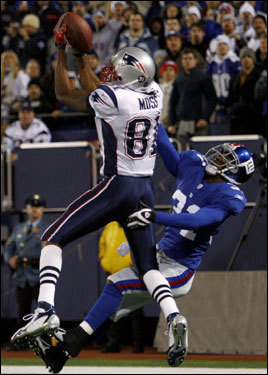
While on vacation at Disney, I was fortunate enough to catch the big 16-0. During the first half, this was a pretty even game - though the Giants led at halftime. It was when the Giants went up by 12, that things were looking scary. Eli and team were running up and down the field at will. They were stopping the normally prolific Pats.

Then something happened. Though I had a feeling of dread, I felt that they would turn it around. If they truly were a Super Bowl caliber team, then that is what greatness is all about. You don't have the luxury of always being ahead. Circumstances like a kickoff return touchdown or a dropped pass can put you behind. In the Giants' case, it was just good aggressive play.

The Patriots must have felt the same way, because they turned it around. Brady found his passing touch, the offensive line held their opponents, and the receivers found their slots. Having Watson back allowed for the short inside option. Welker and Faulk played the slot and Brady found them. You could feel the energy as the Patriots narrowed it to 5 with 12 minutes to go. The defense held the Giants to a quick 3 and out by heavily blitzing Manning. A few possessions later, Brady threw that 2nd bomb for the pivotal touchdown with little real time remaining for 2 scores.

This truly is the mark of greatness - when both the offense and defense step it up to take out a strong playoff team that was playing for the spoiler in what normally would be a meaningless game. This is actually good for the Patriots. They know that they will have to play 60 minutes to win. Sometimes, the defense of a high scoring team settles a bit, but this one knows that they will have to make the big play, like Hobbs' amazing sideline interception. They can't too cocky, because they did not blow them away.

I remember this with teams like Minnesota and St. Louis where over-reliance on a high scoring offense ruined their chances in the playoffs. You have to be strong on both sides of the ball.

Belichick never let his team get ahead of themselves. He treated each week as a mini-season. Never worry about 16-0, just about winning the next game. Similarly, he will not allow this team to get caught up with thinking they have won the Super Bowl today. He will have them break down the film and critique each error. Moss will not get away with the silly end zone celebration. Harrison will not get away with stupid personal fouls for trash talking or late hits. Great leaders find a way to focus their team on the next goal - not on uncontrollable distractions.

What should have been a meaningless game became important because it was for the coveted 16-0 record and pride on the other side. Both teams played well. These are great life lessons. It's important to always be on your toes. Never get down on yourself if you are behind - stay confident and cool under pressure. Draw deep inside to learn and find a way to win. The best know how to do it. Others just have excuses.

Can't wait till the playoffs.

Thursday, December 20, 2007

Bought a Mac - Wore Black

To commemorate the purchase of my first Mac, I wore all black today. Our home PC died either via fried motherboard or for some other reason, so I thought there's no better time than now to try out a Mac. Since I didn't want to spend a whole lot, I bought the Mac Mini. My initial experience has been... very cool.

Apple has really thought through the whole experience from the retail outlet to install and setup.

At the store, friendly and knowledgeable people guide you to understanding the product to making the whole purchase easy. They carry little handhelds that allow you to do it on the spot. They answered all my questions about the differences between the Mac and Windows world. While it may cost a little more to run Windows apps, it seemed worth the try. Having the store for what is a missionary sale is genius. Remember the failure of the Gateway store. The Apple store integrates with the brand experience and just makes you feel comfortable. You know you can ask questions or even attend one of their free sessions - very clever.

After getting them to put in some more memory, I bought a wireless keyboard and mouse. The concept of going completely wireless was very cool, so what the hell, I went for it. It was very clever product design to bake Bluetooth and WiFi into the system.

The install process was ridiculously easy. Connect power and the monitor and turn it on. I had to fill in some forms for registration but the system found the mouse, keyboard and home wireless network. There was really nothing much to do.

Now I did encounter one problem. For some reason my password was not in the system correctly (hard to screw up a password verification). So it required a tech support call. This was also very easy and handled very well by a knowledgeable tech support person from the US. I don't ever remember Microsoft or Dell being so easy to work with. The fix was relatively easy and I was off and running.

Even the box is cool. The packaging is well done - minimalist, yet classy. It's just like the iPod, you can see the refinement at every step. The system itself looks nice. It's amazing how much functionality is in what is essentially a large paperweight. No big system with loud fans and heat blowing out. Just a little box that is simple, cool and attractive to look at. There a slot for a DVD and that's it.

Very quickly we were off and running. I couldn't help but be impressed by the interface, speed and easy to use functionality. Figuring out the Safari browser was easy as was many of the preinstalled apps. For some reason, browsing seems faster on Safari than on Firefox on my Dell laptop. The little remote control on the Mac mini was also cool. I love how the thing goes to sleep to save power and then easily wakes up at the click of a button or move of the mouse. My laptop is a pain by comparison.

For some reason, the viewing experience is cleaner and inviting. It's hard to explain because the functions are different. It's something I wrote about in the Blackberry article. There's a higher sense of refinement in the product in the way windows open and close, how the Dashboard appears, or in changing preferences. The fonts are cleaner and dash is very clever in presentation. In the Windows world, it is cryptic and a bit scary because you could actually do something to mess things up. In the Mac world, it seems so easy and painless.

The true proof in the pudding will be if all the apps run without reboot and the system functions flawlessly. Everything I've heard is encouraging thus far. Instead of MS Office, I'm actually going to try the Apple apps.

So far this is fun. As a marketer, I love the integrated brand experience at every touchpoint. It is so clean, refined and tasteful. They make spending money easy. Maybe the Microsoft universe has something to worry about. Maybe the days of getting away with poor quality and unreliability are numbers. Imagine not having apps that crash daily or force you into doing wasteful things like archiving because of design flaws. This is more than 20 years after the first PC.

If I can get reliability and great functionality with having an issue with apps maybe we'll move the whole company over.

Tuesday, December 18, 2007

Treo Follow Up - Poor Quality Hits the Bottom Line

Today's Headline in Bloomberg

"Palm Forecast Misses Estimates as Customers Defect (Update4)

Dec. 18 (Bloomberg) -- Palm Inc., the maker of the Treo e-mail phone, forecast a wider loss than analysts had estimated after customers defected to the BlackBerry and iPhone. The shares plunged 11 percent in late trading."

Now this article attributes the losses to the following, "Palm has trailed BlackBerry maker Research In Motion Ltd. in updating product design."

I don't think so. This is not a feature thing. The latest version of the Treo has more features than the top of the line 8830. The issue is reliability and refinement. What's refinement? Read a Consumer Reports auto review. You know when you have it vs. when you don't. In Blackberry's case, it is that the features work as expected. When you are using voice dialing, it works. If you need to flip to speakerphone, there's no issue. Email is clean and synchs beautifully with your desktop. You are given options on how you might contact someone. Even though you can't jump by touching a point on the page, you are willing to sacrifice that for a screen that doesn't get dirty. Moreover, the damn thing never freezes while you are typing a message.

See, Palm has to spend a lot of money on marketing it's products. They are not getting positive word of mouth from their existing products. They need to suck people into a feature comparison and hope they are not dumb enough to talk to other people. Palm also has to hope the cell phone store salespeople keep quiet when someone is looking - even though it is in their incentive to have happy customers. In a market where margins are razor thin, spending extra money on marketing to acquire new customers without retention is a loss machine.

Then Palm goes totally low end with the Centro with the worst of all carriers - Sprint. At least in their case the user does not know who to blame poor quality service on. It's like putting 2 bad tennis players together to make a good doubles team - good luck.

I just used my Blackberry 8830 on a round the world trip. Whether I was in Germany, India, Thailand or Singapore I had email, web and voice access. If I had problems, I called the Global Support line and they fixed it quickly. Most of the time, it was in obscure locales where the phone needed to differentiate carriers. The best part was that I could be IM with my son while on a bus in Thailand. I was in touch with my clients and team everywhere - very cool.

Bottom line: build quality and reliability for long term profitability.

Friday, November 16, 2007

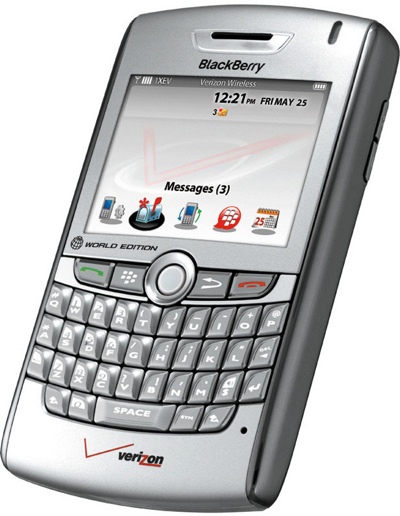
Why We Got the Blackberry - and Dumped the Treo

A week ago, we went over to the Verizon Wireless store to pick up the Blackberry for each member of the US team. I made the decision to take people off their existing plan and phones for a simple reason - quality and control. I wanted to make sure each person could be connected to the clients and the company at all times. We needed a mobile experience where everything worked seamlessly - no reboots, bad voice quality or botched data transfers. We had already gone to an Exchange hosting service to ensure reliable email delivery and integrated calendaring. Up till now everyone had a different phone, different service and individual patterns of access. Now it was time to complete the circle.

Because our team is around the world and our clients are dispersed around the country, time in the office does not reflect a true workday. Work can take place in the middle of the night or early in the morning. If the client has an issue, you need to know right away and respond quickly. We could not afford to waste a moment or give the client a poor connection. Since we are responsible for spending client money, they needed to be assured that the team was on top of things regardless of the situation. There was no excuse for a Client Manager to be out of the office and not receive a critical client email.

This was important after the Treo 700p nightmare that I went through. Great features, poor execution. Reboots happened every day because the damn thing froze all the time. Sometimes, the Treo would reboot when I was in the middle of a call. The Bluetooth connection was uneven. It was maddening and that was even after all the integration and improvement that I got when we implemented the Good Technology software and service. It was as if the people at Palm jammed a bunch of features in to make them look good in product comparison, but they forgot that if the phone is unreliable, you tend not to value the feature. This was the old Microsoft way - fill up the data sheet but don't worry about quality.

Reliability is an expensive investment and difficult to quantify, but people are willing to pay for it. This is what I have seen with the Blackberry 8830 - no crashes, no reboots and amazing integration. Great spell correction, decent voice dialing and just a lot of little touches. Voicemail dialing was preprogrammed. I didn't have to figure out the pauses before auto entry of the password, it gave multiple options in terms of how to contact a person, and the screen is fantastic. As much as I miss the camera, I especially like the idea of getting data access wherever I go around the world. This phone works with GSM and CDMA. Let's also not forget the huge number of free apps for the Blackberry. It makes things a lot easier - from the weather app to Google Maps to Facebook Mobile. I'm still learning all the things I can do and customize. Right now, I'm testing the Jawbone headset because my voice just doesn't carry with these headsets - just didn't get the deep voice genes :).

RIM focused on the needs of the business user with their product and service design. Palm was focused on competing with Microsoft CE and couldn't make up its mind on the business user or the consumer. Their OS is not built for reliability. Quality is worth paying for as is easy integration and functionality. It's not easy to sell, but just ask the guys at the store which phone gets the complaints - it's pretty easy. Email integration is critical for the business user, especially the ability to synch with Exchange & Outlook. That combined with the higher quality Verizon network means that my team is available everywhere.

Our Client Managers were especially happy about the 4 GB memory for their photo and music files as well as the ability to tether with their PC - that means connect their PC to the Net all the time. Then there's the Bluetooth headset and all the accessories. I want them to have fun. That means they're enjoying their job and they're connected - all the time.

This is part of the evolution of the company. When we first started, it was all about keeping burn to the absolute minimum while we figured out our business. Now that we have high profile clients and a proven model, we need to have the highest quality and efficiency possible.

Some people would say that now work is 24 hour. I say it has made work more fun because you can get things done anywhere.

Because communication is more reliable. I'm able to get more done and call more people. That's a good thing for me and Position2.

RIM gets it - execution matters...